

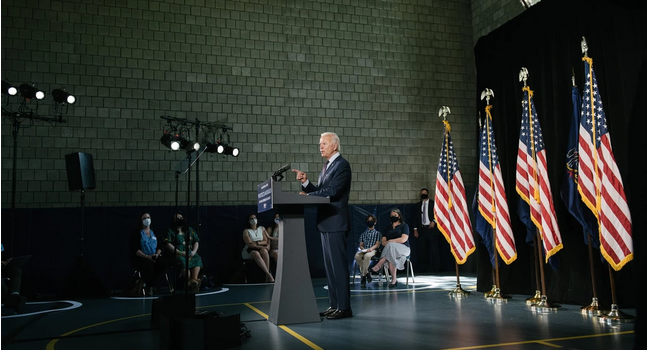
Queen Elizabeth II threw him an extravagant state banquet at Buckingham Palace. Former Prime Minister Theresa May welcomed him to Blenheim Palace, the family seat of his hero, Winston Churchill. Her successor, Boris Johnson, refused to join a global chorus of criticism after he ordered troops to break up a Black Lives Matter protest outside the White House.

Few countries have worked harder than Britain to please President Trump. But now, with Mr. Trump trailing in the polls to former Vice President Joseph R. Biden Jr., British officials are waking up to an unsettling prospect: The president they tried so hard to accommodate may be out of power next year.

In Paris and Berlin, a Trump defeat would be welcomed as an unalloyed relief, removing a leader who has sundered alliances, threatened a trade war, and tried to dismantle the European project. But in London, where Mr. Johnson’s government just left the European Union, it is more complicated.

At a moment of British isolation, Mr. Trump’s full-throated endorsement of Brexit has made the United States a safe harbor. His promise of a lucrative trade deal gave Mr. Johnson a selling point with his voters. His populist politics were in sync with the bare-knuckle tactics of the Brexiteers.

If Mr. Biden wins in November, Britain would face a president who opposed Brexit, would look out for the interests of Ireland in a post-Brexit Europe, and would have little motive to prioritize an Anglo-American trade deal. His former boss, President Barack Obama, once warned Britons that if they left the European Union, they would put themselves at the “back of the queue” in any trade talks with the United States.

“It will not be lost on Biden that the last two British prime ministers went out of their way to be nice to and about Trump,” said Peter Westmacott, a former British ambassador to the United States. “He is instinctively comfortable with Brits, but London will have to work on the relationship.”

As Mr. Trump’s polling numbers have eroded, pro-government papers have begun to make the case that a President Biden would actually be better for Britain than President Trump. Unlike Mr. Trump, he is a believer in alliances. He would not subject Mr. Johnson to rude lectures about the need for Britain to take a harder line against China. He would not be toxic with much of the British public.

In a recent column in The Sunday Times, a well-connected political journalist, Tim Shipman, quoted an unnamed government minister saying that a Trump defeat ‘‘would make things much easier.’’

That sounds like a government hedging its bets. Mr. Johnson has been careful to say nothing about the American election but he has already tried to keep Mr. Trump at arm’s length even as he avoids offending him. Mr. Trump, by contrast, called into a London radio show in the heat of the British election to praise Mr. Johnson and run down his opponent.

Britain’s uneasiness is compounded by the strangeness of this election. The Biden campaign has all but banned contact with foreign governments to avoid the questions that dogged the Trump campaign in 2016 about its ties to Russia. The pandemic has deprived Britain of its long practice of embedding a diplomat in the challenger’s campaign because there is little in-person campaigning.

Jonathan Powell, who as a young British diplomat rode on the bus during Bill Clinton’s 1992 campaign, said the connections he made were valuable in smoothing over bitterness Mr. Clinton’s aides felt toward Britain’s Conservative government after it had tried to dig up incriminating details about Mr. Clinton’s years at Oxford to help George H.W. Bush’s campaign. Mr. Powell later introduced Mr. Clinton to Tony Blair, who went on to become prime minister and a friendlier counterpart.

Riding the bus is less important this time, he said, given that Mr. Biden is already so well-known to British officials. But the lack of a personal connection may foretell a relationship that is destined to become more distant.

The risk for Britain, several experts said, is not a sudden rupture but a gradual slide into irrelevance. Mr. Biden’s emphasis, they said, would be on mending fences with Berlin and Paris, not celebrating a “special relationship” with London that got plenty of attention from his predecessor.

On a visit to London in October 2018, Mr. Biden, not yet a candidate, cast his opposition to Brexit in geopolitical terms, saying it would make Britain less valuable to the United States as a lever to influence the European Union.

Had I been a member of Parliament, had I been a British citizen, I would have voted against leaving,” Mr. Biden said at Chatham House, the London research institution. “U.S. interests,” he added, “are diminished with Great Britain not an integral part of Europe.”

Charles A. Kupchan, a professor at Georgetown University who worked on European affairs in the Obama White House and is advising Mr. Biden’s campaign, said, “The question is not, ‘Will there be a special relationship?’ There will be. The question is, ‘Will the special relationship matter?’”

British officials recognize the challenge. They cite human rights and Russia as areas where Britain could carve out a robust role alongside the United States. Mr. Johnson’s recent reversal, barring the Chinese telecommunications giant Huawei from access to its 5G network, brings Britain in line with a more hawkish American policy toward China, which is likely to extend beyond Mr. Trump’s presidency.

He may need to patch up other lingering issues. In 2016, when Mr. Johnson was mayor of London, he recounted in a newspaper column that Mr. Obama replaced a bust of Churchill in the Oval Office with one of Martin Luther King Jr., and attributed the switch to “the part-Kenyan president’s ancestral dislike of the British Empire.”

Some say fears of tension between Mr. Johnson and Mr. Biden are overblown.

“It’s part of the job for American presidents to get along with prime ministers,” said Tom Tugendhat, a Conservative member of Parliament who is chairman of the Foreign Affairs Committee and has spoken with advisers to Mr. Biden.

Still, there are potential land mines, not least Northern Ireland. A devoted Irish-American, Mr. Biden will fiercely defend Ireland’s interests, as will his allies in the Democratic Party’s Irish lobby on Capitol Hill. In speeches, Mr. Biden’s go-to literary reference is from ‘‘Easter 1916,’’ a poem by the Irish poet William Butler Yeats about the Irish uprising against British rule.

British diplomats gamely point out that Mr. Biden has English roots, too. He has talked of a great-great-great grandfather who was a captain in the British East India Trading Company. But they say that as far as Brexit goes, his primary concern is likely to be the preservation of the Good Friday Agreement, the Clinton-era accord that ended decades of sectarian strife in Northern Ireland.

Source: New York Times
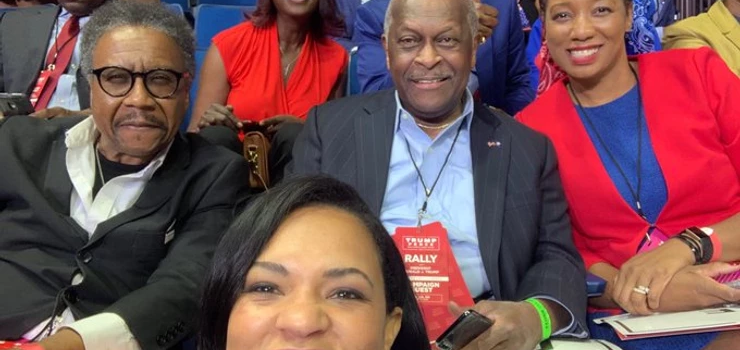
Herman Cain, a onetime Republican presidential candidate and former CEO of Godfather’s Pizza, has died from coronavirus, according to an obituary sent from his verified Twitter account and Newsmax, where he was launching a television show.

Cain, 74, was hospitalized earlier this month, and his Twitter account said this week he was being treated with oxygen in his lungs. It is unknown where Cain contracted the virus.

“You’re never ready for the kind of news we are grappling with this morning. But we have no choice but to seek and find God’s strength and comfort to deal,” his official Twitter account said Thursday.

As a co-chair of Black Voices for Trump, Cain was one of the surrogates at President Donald Trump’s June 20 rally in Tulsa, Oklahoma — which saw at least eight Trump advance team staffers in attendance test positive for coronavirus. Trump campaign spokesman Tim Murtaugh has told CNN that Cain did not meet with Trump at the Tulsa rally

Cain had posted a photo of himself at the rally, seated closely among other attendees without a facial covering

We honestly have no idea where he contracted it. I realize people will speculate about the Tulsa rally, but Herman did a lot of traveling the past week, including to Arizona where cases are spiking,” Dan Calabrese, who has been editor of HermanCain.com since 2012, said in a post earlier this month announcing Cain’s Covid-19 diagnosis.

Cain announced his candidacy for president in 2011. He briefly gained traction in the race for his 9-9-9 tax reform plan, which would have replaced almost all current taxes with a 9% income tax, a 9% corporate tax and a 9% national sales tax. After about seven months, he dropped his bid for the GOP nomination amid sexual harassment allegations, which he denied.

Cain was considered at an increased risk for coronavirus due to his age and history with cancer, according to US Centers for Disease Control and Prevention guidance

In 2006, Cain was given a 30% chance of survival from stage 4 colon cancer that had spread to his liver. He underwent chemotherapy and surgery to remove the cancer from his liver and was declared cancer free in 2007.

He told CNN in a 2011 interview that after beating cancer he felt he had to do “something bigger and bolder,” leading him to decide to run for president.

Cain was born December 13, 1945, in Memphis, Tennessee. He is survived by his wife, Gloria, and their two children, Melanie and Vincent, and grandchildren.

Soon after the news of Cain’s passing, White House press secretary Kayleigh McEnany said the former entrepreneur “embodied the American Dream and represented the very best of the American spirit.”

“Our hearts grieve for his loved ones, and they will remain in our prayers at this time,” McEnany tweeted. “We will never forget his legacy of grace, patriotism, and faith.”

Source: CNN

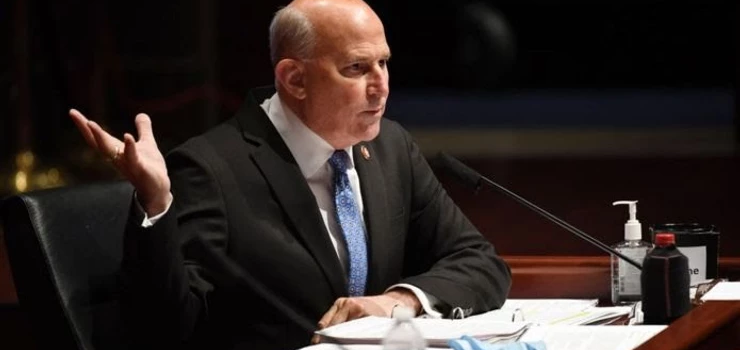
The US House of Representatives has ordered all members and staff to wear masks as the nation’s death toll from coronavirus passed 150,000.

House Speaker Nancy Pelosi warned anyone who breaks the new rule faces being removed from the chamber.

She took the decision after Louie Gohmert, a Texas Republican often seen around the Capitol without a face covering, tested positive on Wednesday.

He had been due to travel that day with US President Donald Trump.

What did the House speaker say?

Mrs Pelosi, a California Democrat, said on the House floor on Wednesday evening that members would be allowed to remove their masks when addressing the chamber.

The chair expects all members and staff to adhere to this requirement as a sign of respect for the health, safety, and wellbeing of others present in the chamber and surrounding areas,” she said.

Mrs Pelosi said she would view “failure to wear a mask as a serious breach of decorum”, warning the House Sergeant at Arms could kick out anyone who did not wear a mask.

According to GovTrack.us , 10 members of Congress – three Democrats and seven Republicans – have confirmed they tested positive, or were diagnosed with coronavirus.

What did Louie Gohmert say?

Mr Gohmert, 66, discovered he was infected when he was routinely tested under White House travel protocol because he had been due to fly with President Trump to Texas on Wednesday.

The eighth-term lawmaker returned to his office to inform his staff in person of the positive result. He wore a mask during the meeting, according to US media.

He also gave an interview in which he pondered whether his mask was to blame for infecting him.

“I can’t help but wonder if by keeping a mask on and keeping it in place, I might have put some germs – some virus – on to the mask and breathed it in,” he told Texas station KETK.

He was one of a contingent of around two dozen Republicans often seen on the House floor without masks.

On Tuesday, Mr Gohmert frequently removed his face covering during a nearly five-hour hearing with Attorney General William Barr.

A photo on Twitter shows the two men in proximity, neither wearing masks. According to the Department of Justice, Mr Barr will be tested for Covid-19 as a result of the interaction.

Despite mixed messages early in the pandemic, public health experts now agree that wearing face coverings greatly reduces the spread of Covid-19, and is vital to controlling the infection’s spread.

Source: BBC

In a White House briefing, Trump defended his decision to promote a viral video of a group of doctors promoting the use of the drug Monday, even though his own administration withdrew emergency authorization for its use against the coronavirus.

“I think they’re very respected doctors,” Trump said, adding they believed in the drug. “There was a woman who was spectacular in her statements about it.” The doctors, members of a group called America’s Frontline Doctors, took part in an event organized by Tea Party Patriots Action, a dark money group that has helped fund a pro-Trump political action committee.

Scientific studies have shown hydroxychloroquine can do more harm than good when used to treat symptoms of COVID-19.

Trump, his son Donald Trump Jr., and others shared video of the event on Facebook and Twitter, prompting both companies to step in and remove the content as part of an aggressive push to keep the sites free of potentially harmful information about the virus — though not before more than 17 million people had seen one version of the video circulating on the web.

The decision to remove the videos sparked conservative claims of “censorship,” with Simone Gold, one of the doctors, tweeting that “there are always opposing views in medicine.”

“Treatment options for COVID-19 should be debated, and spoken about among our colleagues in the medical field,” she wrote. “They should never, however, be censored and silenced.”

Real Madrid forward Mariano has tested positive for coronavirus, the La Liga champions announced on Tuesday.

“After the COVID-19 tests carried out yesterday on our first team footballers by the Real Madrid Medical Services, our player Mariano, tested positive,” Real said in a statement.

“The player is in perfect health and is complying with the protocol of isolation at home.”

Mariano did not join the Real squad as players returned from a post-season break to start training for their Champions League last 16 showdowns at Manchester City on August 7. The 26-year-old has not appeared in that competition this season.

The Dominican international, who returned to Real in 2018 after a successful season at Lyon, played little in the recently finished La Liga season due to competition for places and injuries.

He made only five substitute appearances as Real won their 34th Spanish title, scoring once, an added time goal against Barcelona.

Source :AFP

Qatar will seek to host the 2032 Olympic Games, it said on Monday, joining a crowded field and raising questions about scorching summer temperatures and underwhelming attendances at past events.

India, Australia’s Queensland state, the Chinese city of Shanghai and a potential joint bid between South and North Korea are also being touted for the 2032 summer games.

Under changes put forward in 2014, interested countries submit a request to join the non-committal “continuous dialogue”, which Qatar confirmed to AFP it had done via a letter to the International Olympic Committee (IOC) in Lausanne.

“Today’s announcement marks the beginning of a meaningful dialogue with the IOC’s Future Host Commission to explore our interest further and identify how the Olympic Games can support Qatar’s long-term development goals,” Qatar Olympic Committee president Sheikh Joaan bin Hamad bin Khalifa Al-Thani told AFP in a statement.

Qatar unsuccessfully bid to host the 2016 and 2020 games, having proposed to host the former in October without first clearing it with the IOC.

It won a waiver to propose hosting the 2020 games, a joint bid with Baku, Azerbaijan, between September 20 and October 20, but failed to make the shortlist.

The 2020 games, postponed to 2021 because of the coronavirus pandemic, were awarded to Japan, which also experiences searing summer temperatures, leading officials to schedule events early in the morning when conditions are coolest.

“Qatar has earned the reputation of a world-class destination for major sporting events,” added Sheikh Joaan, brother of Qatar’s ruler Emir Sheikh Tamim bin Hamad Al-Thani.

“It is this proven track-record and wealth of experience, along with our desire to use sport to promote peace and cultural exchange, that will form the basis of our discussions with the Commission.”

Summer temperatures can reach 50 degrees celsius (122 degrees Fahrenheit) in the nation which abuts the Arabian desert. Heat and humidity were major issues during the road races at last year’s World Athletics Championships held in Doha.

The event was shifted to late September and October over concerns about the gas-rich state’s climate and marathons and race walks were held at midnight.

Even so, humidity hovered around 73 percent and the temperature was 33 degrees Celsius (91 degrees Fahrenheit) for much of the women’s marathon and images of the runners collapsing and gasping for air led to questions over Qatar’s suitability to host outdoor events outside the cooler winter months.

Perhaps the most stinging off-track criticism of the 10-day World Athletics event was sparked by the spectacle of a near-empty stadium during the opening days, raising fears for World Cup attendances in 2022 and at other sporting events.

IAAF President Sebastian Coe said he was more worried about conditions at the Tokyo Olympics, where summer temperatures have pushed organisers to schedule events for the early morning.

Source: AFP

TUI, Europe’s biggest holiday company, said on Sunday it had decided to cancel all holidays to mainland Spain up to and including Sunday August 9 in updated advice after Britain imposed a quarantine on those returning from the country.

“TUI UK have taken the decision to cancel all holidays to mainland Spain up to and including Sunday 9th August 2020,” it said in a statement.

“We know how much our customers look forward to their holiday abroad and some will be able to accommodate the new quarantine restrictions. Therefore all those that wish to travel to the Balearic Islands and Canary Isands will be able to travel as planned from Monday 27th July.”

Source: Aljazeerah

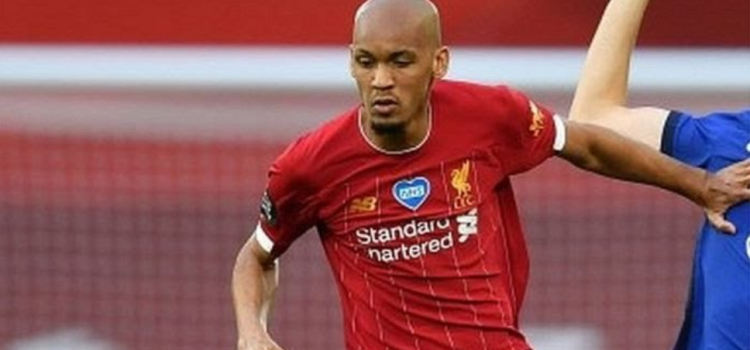
Liverpool midfielder Fabinho’s home was burgled as the footballer celebrated the team’s Premier League win.

Liverpool midfielder Fabinho’s home was burgled as the footballer celebrated the team’s Premier League win.

Thieves broke in to the Brazilian’s home on the day the Reds were presented with the trophy for their first top flight win in 30 years .

Items of jewellery and an Audi RS6 were stolen during the raid in Formby, Merseyside Police said. The car was later recovered in Wigan.

The burglary was discovered when the occupants returned.

Police said thieves targeted the footballer’s home sometime between 15:00 BST on Wednesday and 04:00 on Thursday.

On Wednesday evening Sir Kenny Dalglish presented the Premier League trophy to Liverpool after a 5-3 home win over Chelsea .

Fabinho joined the Reds in 2018 in a deal worth more than £40m.

Source: BBC News

Twitter has revealed that hackers viewed private direct messages (DMs) from 36 of the accounts involved in last week’s hack.

It did not disclose who they belonged to beyond saying one was owned by an elected official in the Netherlands.

But the Dutch far-right politician Geert Wilders has told the BBC that this was a reference to his account.

Twitter has said that it does not believe any other former or current politicians had their DMs accessed.

It is not clear how many of the accounts overlap with the 45 that tweeted a Bitcoin scam.

Last week, Mr Wilders’ profile image was replaced with that of a cartoon of a black man, and his account’s background image was changed to that of the Moroccan flag.

Mr Wilders’ Freedom Party is the second biggest party in Netherland’s House of Representatives. In the last Dutch election it campaigned to ban Muslim immigration and shut mosques.

I was informed by Twitter last night… that my Twitter account was not only hacked for some days and the hacker also posted tweets on my account and sent DMs in my name, but indeed also got full access to my DMs, which of course is totally unacceptable in many ways,” Mr Wilders said.

“People critical of Islam or regimes in the Middle East [including those] from within countries like Iran, Saudi Arabia and Syria [have sent me DMs over 10 years] and I do hope they will not be in danger if their identity would be exposed because of this hack.

“I had deleted most of them but maybe some were left there for the hacker to see and copy.”

Twitter also commented further about the incident as it released its latest earnings.

“We’ve implemented safeguards to improve the security of our internal systems and are working with law enforcement as they conduct their investigations,” it said.

“We understand our responsibilities and are committed to earning the trust of all our stakeholders with our every action, including how we address the security issue.

“We will continue to be transparent in sharing our learnings and remediations.”

Calls to testify

On 16 July, the accounts of several high profile business leaders, celebrities and politicians accounts posted a bogus get-rich-quick scheme, including:

Amazon’s founder Jeff Bezos

Tesla’s chief Elon Musk

the rapper Kanye West

the reality-TV star Kim Kardashian West

former US President Barack Obama

the Democratic presidential candidate Joe Biden

It is believed victims sent about $120,000 (£93,600) in Bitcoin to the perpetrators, and the sum would have been larger if a crypto-currency exchange had not blocked further transfers.

Twitter has said a total of 130 accounts were targeted in the attack, which exposed personal information including email addresses and telephone numbers.

It previously revealed that eight non-verified accounts had all of their Twitter data downloaded, including DMs. The firm has not said if any of these coincide with the ones whose DM inboxes were looked at.

The US Senate Commerce Committee has demanded Twitter brief it about the wider incident by 23 July.

The senior Republican on the House of Representatives’ Judiciary committee has also called on its chair to ask Twitter’s chief executive Jack Dorsey to attend a separate hearing on Monday, at which Facebook, Apple, Google and Amazon’s chief executives are already scheduled to give testimony.

However, political watchers say it is unlikely that a formal invitation will be made as the focus of that event is anti-competitive behaviour, and Twitter is a much smaller company than the others.

Source: BBC News

Researchers found a potential vulnerability in an app that helps power the drones, highlighting U.S. officials’ concerns that Beijing could get access to information about Americans.

Cybersecurity researchers revealed on Thursday a newfound vulnerability in an app that controls the world’s most popular consumer drones, threatening to intensify the growing tensions between China and the United States.

In two reports, the researchers contended that an app on Google’s Android operating system that powers drones made by China-based Da Jiang Innovations, or DJI, collects large amounts of personal information that could be exploited by the Beijing government. Hundreds of thousands of customers across the world use the app to pilot their rotor-powered, camera-mounted aircraft.

The world’s largest maker of commercial drones, DJI has found itself increasingly in the cross hairs of the United States government, as have other successful Chinese companies. The Pentagon has banned the use of its drones, and in January the Interior Department decided to continue grounding its fleet of the company’s drones over security fears. DJI said the decision was about politics, not software vulnerabilities.

For months, U.S. government officials have stepped up warnings about the Chinese government’s potentially exploiting weaknesses in tech products to force companies there to give up information about American users. Chinese companies must comply with any government request to turn over data, according to American officials

Every Chinese technology company is required by Chinese law to provide information they obtain, or information stored on their networks, to Chinese authorities if requested to do so,” said William R. Evanina, director of the National Counterintelligence and Security Center. “All Americans should be concerned that their images, biometrics, locational and other data stored on Chinese apps must be turned over to China’s state security apparatus.”

The drone vulnerability, said American officials, is the kind of security hole that worries Washington.

The security research firms that documented it, Synacktiv, based in France, and GRIMM, located outside Washington, found that the app not only collected information from phones but that DJI can also update it without Google reviewing the changes before they are passed on to consumers. That could violate Google’s Android developer terms of service.

The changes are also difficult for users to review, the researchers said, and even when the app appears to be closed, it awaits instructions from afar, they found

.The phone has access to everything the drone is doing, but the information we are talking about is phone information,” said Tiphaine Romand-Latapie, a Synacktiv engineer. “We don’t see why DJI would need that data.”

Ms. Romand-Latapie acknowledged that the security vulnerability did not amount to a backdoor, or a flaw that allowed hackers into a phone.

DJI says its app forces updates on users to stop hobbyists who try to hack the app to circumvent government-imposed restrictions on where and how high drone can fly.

“This safety feature in the Android version of one of our recreational flight control apps blocks anyone from trying to use a hacked version to override our safety features, such as altitude limits and geofencing,” Brendan Schulman, a DJI spokesman, said in a statement. “If a hacked version is detected, users are prompted to download the official version from our website.” He added that the feature was not present in software used by governments and companies.

Neither Synacktiv nor GRIMM disclose their clients, but both have done work for aerospace companies and drone manufacturers that could potentially complete with DJI.

A Google spokesman said the company was looking into the claims in the new reports. Synacktiv did not find the same vulnerability in the drone maker’s iPhone application. Apple’s App Store is available in China.

“This research is a good reminder that organizations need to pay attention to the risks associated with the various technologies they’re using for operations,” said Christopher Krebs, director of the Cybersecurity and Infrastructure Security Agency.

Some of the privacy concerns about the drones are common across many applications that scrape far more information than consumers may realize. But other potential vulnerabilities outlined by the researchers come from attempts to straddle the radically different internet environments in China, where the government can demand user data with near impunity, and in other places, like the United States, where broader legal protections exist.

For instance, DJI’s direct link to the Android app was most likely designed as a workaround for Chinese policies that block Google in China, forcing companies to send Android app updates themselves. App makers in China must rely on a chaotic and competitive clutch of websites and app stores to get their products to the consumer. Under such limitations, updates are not easy, and some companies craft software that can be upgraded directly when needed.

Much of the technical data that the app collects fits with Chinese government surveillance practices, which require phones and drones to be linked to a user’s identity.

Such features look more like vulnerabilities in places like the United States. And with U.S.-China ties at their lowest in decades, Washington has taken an increasingly dim view of such issues, assuming that if Beijing can exploit a flaw in technology, it eventually will.

An icon of Chinese innovation, as well as a longtime security concern in the United States, DJI has struggled to allay worries about the safety of its drones, which shoot movies, guard power plants, count wildlife and assist military and the police. For years, it has responded repeatedly to reports of vulnerabilities with patches and has worked closely with the U. S. government to quash other fears.

Source: The New York Times