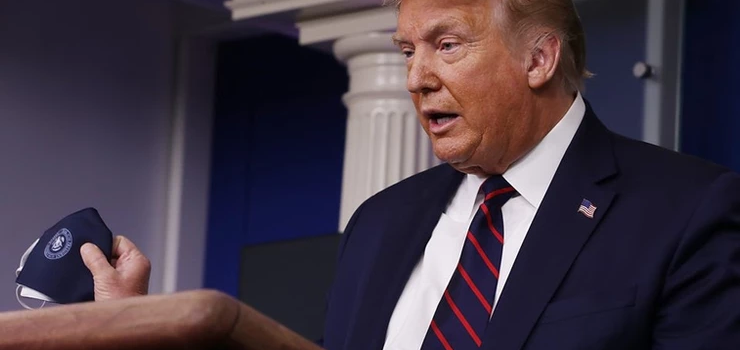
President Donald Trump has warned the US pandemic may “get worse before it gets better”, as he revived his virus briefings with a more scripted tone.

Mr Trump also asked all Americans to wear face coverings, saying “they’ll have an effect” and show “patriotism”.

The president, who was not wearing a mask at the briefing, has previously disparaged them as unsanitary.

His aides have reportedly pressed him to adopt a more measured approach as virus caseloads spike across the US.

The daily White House news conferences ended soon after Mr Trump suggested in April during freewheeling remarks from the podium that the virus might be treated by injecting disinfectant into people.

In his first White House coronavirus briefing for months on Tuesday, a less off-the-cuff president echoed what public health officials on his pandemic task force have been saying as he warned: “It will probably unfortunately get worse before it gets better.

“Something I don’t like saying about things, but that’s the way it is.”

He added: “We’re asking everybody that when you are not able to socially distance, wear a mask, get a mask.

“Whether you like the mask or not, they have an impact, they’ll have an effect and we need everything we can get.”

Mr Trump – who more than once referred to Covid-19 as the “China virus” – took a mask from his pocket in the briefing room, but did not put it on.

The president is facing an uphill climb to re-election in November against Democratic challenger, Joe Biden, according to opinion polls.

Mr Biden on Tuesday accused Mr Trump of having failed Americans in his handling of the pandemic. “He’s quit on you, he’s quit on this country,” the former US vice-president said.

The UK will be living with coronavirus for many years to come and even a vaccine is unlikely to eliminate it for good, experts are warning.

Wellcome Trust director Prof Sir Jeremy Farrar told the House of Commons’ Health Committee “things will not be done by Christmas”.

He went on to say humanity would be living with the virus for “decades”.

It comes after the prime minister said last week he hoped for a return to normality by Christmas .

Boris Johnson made the comments as he set out plans to further ease restrictions, including the opening of leisure centres and indoor swimming pools later this month and the prospect of mass gatherings being allowed from the autumn.

But experts giving evidence to the cross-party group of MPs said it was important to be realistic that the virus would still be here.

Sir Jeremy, a member of Sage, the government advisory body, said the world would be living with Covid-19 for “very many, many years to come”.

“Things will not be done by Christmas. This infection is not going away, it’s now a human endemic infection.

“Even, actually, if we have a vaccine or very good treatments, humanity will still be living with this virus for very many, many years…. decades to come.”

He urged against complacency during the summer, saying the period was a “crucial phase” to prevent a second wave.

“If we have any sense of complacency of ‘this is behind us’, then we will undoubtedly have a second wave, and we could easily be in the same situation again.”

He said it was important to further build up testing capacity as well as investing in treatments and vaccines.

Vaccine ‘unlikely to have durable effect’

Prof Sir John Bell, of the University of Oxford, said he thought it was unlikely that Covid-19 would ever be eliminated despite the positive news announced on Monday that trials by his university had triggered an immune response – an important step in developing a vaccine.

“The reality is that this pathogen is here forever, it isn’t going anywhere,” he told MPs.

“Look at how much trouble they’ve had in eliminating, for example, polio, that eradication programme has been going on for 15 years and they’re still not there.

“So this is going to come and go, and we’re going to get winters where we get a lot of this virus back in action.

The vaccine is unlikely to have a durable effect that’ll last for a very long time, so we’re going to have to have a continual cycle of vaccinations, and then more disease, and more vaccinations and more disease.

“So I think the idea that we’re going to eliminate it across the population, that’s just not realistic.”

Chief adviser defends government record

The government’s chief medical adviser was also quizzed by MPs.

Prof Chris Whitty was asked at length about the UK’s record so far in tackling coronavirus.

He defended moves to end attempts at trying to contain the virus in March, while defending the actions of ministers accused of announcing lockdown too late.

Crucial evidence about the scale of the outbreak and modelling about how quickly it could spread was presented to ministers on 16 March.

But it was a full week later that a total lockdown was announced.

Prof Whitty said it was not a “huge delay” given the “enormity” of the decision.

He also pointed out that others steps were taken in the meantime, including the closing of schools.

Meanwhile, Health Secretary Matt Hancock has defended the government’s record on testing – and his decision to set the target of providing 100,000 tests a day by the end of April.

The move has been criticised with some describing it as arbitrary.

But Mr Hancock told the Science and Technology Committee, which was sitting after the Health Committee, that it was important because of the need to “scale up” at an unprecedented speed.

“The point of the big, hairy, audacious goal is to say to the whole system, ‘this is where we’re going, you do your bit, let’s get there’.”

UK coronavirus statistics:

45,422 people had died in hospitals, care homes and the wider community after testing positive for coronavirus in the UK as of 5pm on Monday, up by 110 from the day before

Separate figures published by the UK’s statistics agencies show there have now been 56,100 deaths registered in the UK where Covid-19 was mentioned on the death certificate

In the 24-hour period up to 9am on Tuesday, there had been a further 445 lab-confirmed cases. Overall, a total of 295,817 cases have been confirmed since the outbreak began

Source: BBC

An officer has been suspended after footage emerged that appears to show police kneeling on a man’s neck.

Video recorded in Islington, London, shows two officers holding a handcuffed suspect, who is black, on the pavement.

A second officer has been removed from operational duty following the arrest on Thursday evening.

Deputy Met Police commissioner Sir Steve House said the footage was “extremely disturbing” and had been referred to the police watchdog.

The force confirmed it had charged a 45-year-old man with possession of a knife in a public place.

Marcus Coutain, of Islington, is due to appear in custody at Highbury Corner Magistrates’ Court on Saturday.

‘Get off my neck’

In the footage, shared with the BBC, one of the officers appears to be using his knee to control the suspect and has his hand on the man’s head.

The man on the ground, who is in handcuffs, repeatedly shouts: “Get off my neck.”

He is eventually released from the ground and continues to talk to officers after they sit him up

Source: BBC

When a young tech entrepreneur with a history of doing business in Nigeria and Bangladesh was found dismembered this week in his multimillion dollar Manhattan condominium, the case at first seemed to have all the trappings of an international thriller.

Someone in a black suit, a mask and latex gloves had followed the victim, Fahim Saleh, into his apartment while carrying a duffel bag, a security video showed. The person then subdued Mr. Saleh with a Taser, stabbed him to death and returned the next day to dismember him with an electric saw, the police said. One law enforcement official said it “looked like a professional job.”

But instead of leading detectives toward Mr. Saleh’s overseas business projects, the evidence quickly pointed to someone close to home, the police said: his onetime personal assistant

On Friday, the former assistant, Tyrese Devon Haspil, 21, was arrested and charged with murdering Mr. Saleh, 33. Some investigators theorized that the suspect had tried to make the killing look like a professional assassination to divert attention from himself.

“Mr. Haspil was Mr. Saleh’s executive assistant and handled his finances and personal matters,” the chief of detectives, Rodney K. Harrison, said at a brief news conference on Friday afternoon. “It is also believed that he owed the victim a significant amount of money.”

According to three officials briefed on the matter, Mr. Saleh had discovered that Mr. Haspil had stolen roughly $90,000 from him. Though Mr. Saleh, who friends said was a generous man, fired Mr. Haspil, he did not report the theft, the officials said. He even offered to arrange a way for his former employee to work off his debt in what amounted to a payment plan.

Mr. Haspil, a Long Island native who had recently attended Hofstra University, was arrested at 8:45 a.m. on Friday in the lobby of a building at 172 Crosby Street in SoHo, where he had been staying in an apartment with a female friend, one official said. New York detectives and federal agents from a U.S. Marshals Service regional fugitive task force took him into custody.

“He tried to run,” said the building’s superintendent, who declined to give his name, explaining that he was not authorized to speak on behalf of the owner. The superintendent added that Mr. Haspil had arrived at the Crosby Street apartment at some point on Wednesday and that he was planning to leave on Monday.

Mr. Saleh was discovered dead on Tuesday, when his cousin went to check on him at his $2.25 million condo in a luxury building on East Houston Street on the Lower East Side. The cousin, officials said, was worried after not hearing from him for about a day.

When the cousin got to the apartment, the police said, she discovered a horrifying scene: Mr. Saleh’s head and limbs had been removed, and parts of his body had been placed in plastic bags designed for construction debris. An electric saw was plugged in nearby.

Investigators have concluded that Mr. Saleh had been killed the day before, according to a fourth official with knowledge of the inquiry.

A video shows the man the police believe to be Mr. Haspil following Mr. Saleh into his building and then into an elevator, where they appear to engage in small talk, the officials said.

The suspect was dressed in a black three-piece suit and wore a black mask and latex gloves, the officials said. He was carrying a duffel bag.

As the two men left the elevator, which opened directly into Mr. Saleh’s seventh-floor unit, the assailant fired a Taser into Mr. Saleh’s back, immobilizing him, law enforcement officials said. He then stabbed Mr. Saleh to death, wounding him multiple times in his neck and torso.

After the attack, the suspect used a credit card to hire a car to go to a Home Depot, on West 23rd Street in Manhattan, and to buy cleaning supplies, the fourth official said. The next day, dressed in a gray hooded sweatshirt, the assailant returned to Mr. Saleh’s apartment to dismember the body and clean up the crime scene

Security video from inside Mr. Saleh’s elevator showed that the suspect used a portable vacuum cleaner, perhaps in an effort to remove residue that was left behind when the Taser was fired, the officials said.

But while the assailant was cutting up the body, Mr. Saleh’s cousin buzzed the apartment from the building’s lobby. Before she got upstairs, the attacker fled through a back door and down a stairwell, officials said.

Only four years ago, Mr. Haspil graduated from Central High School in Valley Stream, N.Y., where he won an award for website design, according to local news articles. In 2017, he entered Hofstra as a member of its class of 2021.

Detectives believe that he began working for Mr. Saleh when he was 16, and eventually started managing some of his finances as well as taking care of personal matters, like caring for his dog. One official said Mr. Saleh paid him well enough that he was able to settle the debts of several members of his family.

Mr. Haspil had recently lived on Woodruff Avenue in Brooklyn, where Kate Hain, one of his neighbors, said that nothing about him suggested he was capable of homicide.

“He and his roommate seemed to keep to themselves and not cause any issues in the building,” Ms. Hain said. She added that Mr. Haspil had done “nothing unusual” in all the time he lived there.

Mr. Saleh was born in Saudi Arabia to Bangladeshi parents who eventually settled near Poughkeepsie, N.Y., a small city on the Hudson River. In a statement earlier this week, his family called his death an “unfathomable” shock.

After graduating from Bentley University in Waltham, Mass., in 2009, he built an app called PrankDial that allowed users to send prerecorded prank calls. Mr. Saleh has said he eventually built PrankDial into a $10 million business.

Mr. Saleh went on to found Pathao, a motorcycle ride-sharing start-up in Bangladesh. He left that company in 2018 to begin a similar venture in Nigeria, an app known as Gokada. He was also the founding partner in a Manhattan-based venture capital fund, Adventure Capital, that invested in similar transit start-ups in Colombia and Bangladesh.

Shortly after 5 p.m. on Friday, Mr. Haspil was led out of the 7th Precinct station house on the Lower East Side in handcuffs and a white jumpsuit. He declined to answer questions fired at him by reporters.

Initially, a law enforcement official had described Mr. Saleh’s death as a “hit,” but some investigators now believe that Mr. Haspil may have tried to make the killing look like a professional assassination in an effort to trick detectives into thinking it was linked to Mr. Saleh’s business deals.

Still, one investigator said that Mr. Haspil made “several rookie mistakes” — including buying a Taser online with his own credit card and signing for the package when it arrived in June.

The superintendent at the Crosby Street apartment said the police told him that Mr. Haspil had also used one of Mr. Saleh’s credit cards to buy balloons to celebrate the birthday of the woman he was staying with. On Friday afternoon, the superintendent said, the balloons were still in the apartment.

“The credit card was used to buy balloons, and this and that, because he was with a girl for her birthday,” the superintendent said. “How stupid can you be?”

Source: NY Times

John Lewis, who went from being the youngest leader of the 1963 March on Washington to a long-serving congressman from Georgia and icon of the civil rights movement, died Friday. He was 80.

In December 2019, he was diagnosed with pancreatic cancer.

As a leader of the Student Nonviolent Coordinating Committee, Lewis was a committed participant in some of the key moments of the movement — an original Freedom Rider in 1961, a principal speaker at the March on Washington in 1963, one of those brutally clubbed during a 1965 march in Selma, Ala. Through it all, he faced taunts, beatings and dozens of arrests.

“In the face of what John considered the evils of segregation, he was fearless,” said longtime SNCC activist Courtland Cox.

By his middle years, he was in Congress and sometimes referred to it as its “conscience

Tributes poured in late Friday night from across the political spectrum, with Democrats and Republicans offering condolences on Lewis’ passing.

“Today, America mourns the loss of one of the greatest heroes of American history: Congressman John Lewis, the Conscience of the Congress,“ House Speaker Nancy Pelosi said late Friday.

In 2009, he was a witness to the inauguration of Barack Obama, the first African American president.

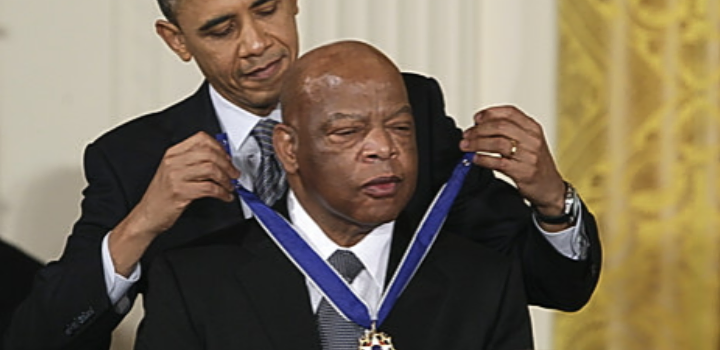
“Generations from now,” Obama said when awarding him a Medal of Freedom in 2011, “when parents teach their children what is meant by courage, the story of John Lewis will come to mind — an American who knew that change could not wait for some other person or some other time; whose life is a lesson in the fierce urgency of now.”

In 2017, he came under attack from Obama’s successor, Donald Trump. “All talk, talk, talk — no action or results,” Trump tweeted of Lewis as the two traded insults. Lewis subsequently invoked Trump to encourage his admirers: “Do not get lost in a sea of despair,” he tweeted in June 2018. “Be hopeful, be optimistic. Our struggle is not the struggle of a day, a week, a month, or a year, it is the struggle of a lifetime. Never, ever be afraid to make some noise and get in good trouble, necessary trouble.”

Through it all, the son of the deeply segregated Deep South had an outsize impact on public life.

John Robert Lewis was born in Troy, Alabama, on Feb. 21, 1940, one of 10 children of Eddie and Willie Mae Lewis. According to “March,” his three-part autobiography in graphic novel form, he dreamed from a young age of being a preacher. He was in charge of taking care of his family’s chickens and would practice sermons on them: “I preached to my chickens just about every night.”

His early years predated the big burst of activism that would begin in the mid 1950s. “Growing up in rural Alabama,” he wrote in “March,” “my parents knew it could be dangerous to make any waves.” Even after the 1954 Brown v. Board of Education decision, nothing much changed in his rural community.

As a teen, Lewis met both Rosa Parks and Rev. Martin Luther King Jr. In 1957, he went to the American Baptist Theological Seminary in Nashville, where he connected with some of the people who would become leading lights of the civil rights movement: Diane Nash, James Bevel, Jim Lawson, Bernard Lafayette and C.T. Vivian. (Vivian died earlier Friday at the age of 95.)

“By the fall of ’58, my eyes were opening in many ways,” he wrote in “Walking With the Wind: A Memoir of the Movement,” his 1998 memoir. Lewis would help launch SNCC, an organization founded as an offshoot of the Southern Christian Leadership Conference led by King and dedicated to the principles of nonviolence.

The movement had begun to blossom. It took a further step forward with the first sit-in in Greensboro, N.C., at a lunch counter at a Woolworth’s in February 1960. The Nashville activists were soon emulating the tactic, starting with lunch counters and moving on other establishments, such as movie theaters. During one sit-in, a restaurant owner turned a fumigating machine on Lewis and Bevel and left. “Were we not human to him?” Lewis wondered

What we found, as we pushed our protests deeper into the heart of segregated society,” Lewis wrote in “March,” “was that our nonviolent actions were met with increasingly more violent responses.”

In May 1961, Lewis headed south with the first Freedom Riders, an integrated group of bus riders who traveled from Washington to integrate the facilities of interstate bus terminals. Lewis was the first of the riders to be assaulted, during a stop in Rock Hill, S.C. He was punched and kicked. Lewis would be assaulted again in Montgomery, Ala., where he was knocked unconscious.

“I could feel my knees collapse and then nothing,” Lewis recalled, according to “Freedom Riders: 1961 and the Struggle for Racial Justice” by Raymond Arsenault. “Everything turned white for an instant, then black.”

For his trouble, he would subsequently be jailed, ending up in Mississippi’s notorious Parchman Farm. In the fall of 1961, however, the campaign yielded results: All interstate travel facilities were integrated.

“The fare was paid in blood,” Lewis wrote in “March,” “but the Freedom Rides stirred the national consciousness and awoke the hearts and minds of a generation.”

SNCC veteran Cox said in 2020: “John’s fundamental belief of confronting the evils of segregation that was pervasive in the South allowed him to ‘march into hell for a heavenly cause.’”

In 1963, Lewis became SNCC‘s chairman. That made him the head of one of the six leading civil rights organizations working on the Aug. 28 March of Washington for Jobs and Freedom that was being planned by A. Philip Randolph, a labor leader and elder statesman of the civil rights movement. Randolph had been trying to organize such a march since 1941.

The others were King, James Farmer Jr. (Congress of Racial Equality), Roy Wilkins (National Association for the Advancement of Colored People) and Whitney Young Jr. (National Urban League).

Lewis was the youngest of the so-called “Big Six” and, as soon became evident, the most militant. In the final hours leading up to the event, some of his fellow leaders panicked over what Lewis planned to say.

“In the original draft of his speech,” David Remnick wrote in 2009, “the demand for racial justice and ‘serious revolution‘ was so fearless that, in the last minutes before the program began, Dr. King, Bayard Rustin, Roy Wilkins, and other movement organizers negotiated with him to remove any phrases that might offend the Kennedy administration.”

Lewis’ line that “the revolution is at hand” alarmed the old guard of the movement. So did his assertion that “we will march through the South, through the heart of Dixie, the way Sherman did.” Lewis, as always, was committed to nonviolence, but his fellow leaders feared he would be misconstrued.

Randolph spent hours mediating between Lewis and other leaders, trying to get Lewis to edit his speech. The discussion was heated and emotional, but ultimately Lewis made some changes.

I was angry, but when we were done, I was satisfied,” Lewis later wrote in “Walking With the Wind.”

“The speech still had fire. It still had bite, certainly more teeth than any other speech made that day. It still had an edge, with no talk of ‘Negroes’ — I spoke instead of “black citizens” and “the black masses,’ the only speaker that day to use those phrases.”

Shortly after Lewis spoke, King took the podium and offered his “I Have a Dream” speech. Lewis would later write he didn’t consider it King’s best speech, but added: “Considering the context and setting and the timing of this one, it was a truly a masterpiece, truly immortal.”

The year 1964 brought the Freedom Summer, a SNCC-led attempt to register and educate as many voters as possible in Mississippi. Lewis recruited students from around the country to join the effort, including Andrew Goodman and Michael Schwerner, who would be brutally slain along with James Chaney.

On March 7, 1965, Lewis was again involved in a milestone of the movement. “In Selma, Lewis led a march across the Edmund Pettus Bridge straight into a blockade set up by Alabama state troopers. The first nightstick came down on Lewis’s skull,” Remnick wrote in 2009.

In his memoir, Lewis said Alabama’s “Bloody Sunday” was a strange day from the get-go. “It was somber and subdued, almost like a funeral procession,” he wrote in “Walking With the Wind“ of the march he led with Hosea Williams. “There were no big names up front, no celebrities. This was just plain folks moving through the streets of Selma.”

Calling him “a personal hero,” Sen. John McCain described Lewis‘ actions that day as exemplary of America’s most basic dreams.

“In America, we have always believed that if the day was a disappointment, we would win tomorrow,” McCain wrote in 2018‘s “The Restless Wave.” “That’s what John Lewis believed when he marched across this bridge.”

The footage of the beatings that day in Alabama pushed President Lyndon B. Johnson to action on civil rights legislation. “Something about that day in Selma touched a nerve deeper than anything that had come before,” Lewis later wrote.

After Selma and with each passing month, SNCC became more militant. The organization grew to reflect the disappointment of those who saw progress as coming too slow. “Something was born in Selma, but something died there, too,” Lewis wrote in “Walking With the Wind.” “The road of nonviolence had essentially run out.” (King’s assassination in 1968 was another devastating blow against those advocating nonviolence.)

In 1966, Lewis lost the chairmanship to Stokely Carmichael, champion of the slogan “Black Power.” “My life, my identity, most of my very existence, was tied to SNCC,” Lewis recalled in “Walking With the Wind.” “Now, so suddenly, I felt put out to pasture.”

In 1968, he worked on the presidential campaign of Robert F. Kennedy. On the night of the California primary, he was with the campaign at the Ambassador Hotel in Los Angeles when Kennedy was shot and killed by Sirhan Sirhan.

Lewis moved on to the Voter Education Project in 1970, and in 1977 made his first stab at electoral politics, running unsuccessfully for a House seat in Georgia.

After a stint on Atlanta’s City Council, he tried again for the House in 1986 and won, edging out fellow activist Julian Bond. He remained in the House after that, an ardent Democratic partisan but one who said that his mission never changed.

“My overarching duty,” Lewis wrote in 1998, “as I declared during that 1986 campaign and during every campaign since then, has been to uphold and apply to our entire society the principles which formed the foundation of the movement to which I have devoted my entire life.”

Lewis spent years pushing for a National Museum of African American History and Culture in Washington, introducing legislation every year until it finally passed in 2003. “Giving up on dreams is not an option for me,” he wrote when the museum opened in 2016.

Though not an author of much in the way of major legislation, some issues drew out his eloquence. In March 2010, in the final stages of the fierce debate over the Affordable Care Act, he fought for its passage. “This may be the most important vote that we cast as members of this body,” Lewis said. “We have a moral obligation today, tonight, to make health care a right and not a privilege.”

In 2016, he was one of the leaders of a unique sit-in on the House floor in support of gun-safety legislation. “Give us a vote. Let us vote. We came here to do our job,” he said. (The sit-in failed.)

As time passed, he came to be seen as the living embodiment of the civil rights movement.

Many awards came his way: a Lincoln Medal from Ford’s Theatre, a Preservation Hero award from the National Trust for Historic Preservation, the NAACP Spingarn Medal, the Liberty Medal from the National Constitution Center, a Dole Leadership Prize named for Bob Dole, and a John F. Kennedy Profile in Courage Award for lifetime achievement, among others. Stephan James portrayed him in the 2014 movie “Selma.” Universities showered him with honorary degrees. In 2016, the U.S. Navy announced that it was naming a ship, a replenishment oiler, after him.

During his congressional career, Lewis often led bipartisan delegations of lawmakers to the Edmund Pettus Bridge to reenact the Bloody Sunday march. Those members would come away from the trips vowing to work for a more equitable society, which gratified Lewis.

In 2013, he launched a trilogy titled “March,” graphic novels written with Andrew Aydin and Nate Powell that chronicled the early decades of his life. In 2016, the third installment became the first graphic novel to win a National Book Award. “I grew up in rural Alabama — very, very poor with very few books in our home,” Lewis said in accepting the award.

The “March” books used the inauguration of Obama as a framing device. Lewis was initially a Hillary Clinton supporter in 2008, but Obama’s election shined a spotlight on Lewis. The new president signed a photograph to him: “Because of you, John.”

The Trump years were different. Lewis had sparred with Republicans before — even calling for the impeachment of President George W. Bush — but the jousting with Trump escalated quickly. Saying he didn’t believe Trump was “a legitimate president,” Lewis announced he would not attend the inauguration.

Trump responded on Twitter. “Congressman John Lewis should spend more time on fixing and helping his district, which is in horrible shape and falling apart (not to … mention crime infested) rather than falsely complaining about the election results. All talk, talk, talk — no action or results. Sad!,” he said.

Lewis remained a prominent foe of Trump. “I think he is a racist,” Lewis said of the president in January 2018.

Lewis’ cancer diagnosis at the end of 2019 led to an outpouring of support. “There is no more important New Year’s resolution, and it begins right now: pray for John Lewis,” tweeted NPR’s Scott Simon. On that day, Obama tweeted: “If there’s one thing I love about @RepJohnLewis, it’s his incomparable will to fight. I know he’s got a lot more of that left in him.“

In 2009, Lewis met with a white man named Elwin Wilson, who was among those who assaulted Lewis and other Freedom Riders in 1961. Following Obama’s election in 2008, Wilson said he had an epiphany and traveled to Washington to apologize for his violent acts and seek Lewis’ forgiveness. Lewis gave it freely.

“It’s in keeping with the philosophy of nonviolence,” Lewis later told the New York Times. “That’s what the movement was always about, to have the capacity to forgive and move toward reconciliation.”

Source: Politico

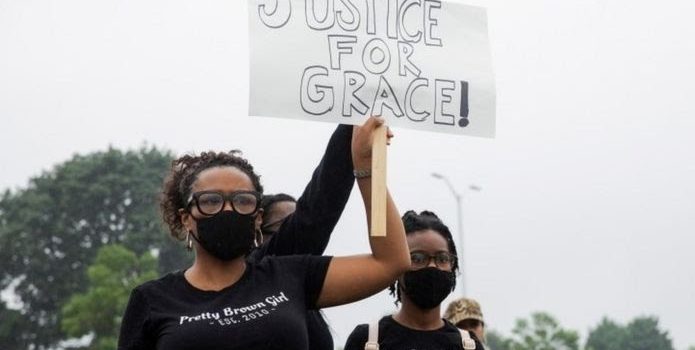
A Michigan judge’s decision to send a 15-year-old girl to juvenile detention for violating her probation by not completing her online schoolwork during the coronavirus lockdown has prompted protests and calls for her release.

The African-American teenager has reportedly been detained since mid-May.

Hundreds of students gathered outside her school and the court to show their support for the girl known as “Grace”.

The state’s supreme court said on Thursday it would review her case.

ProPublica highlighted Grace’s case in a report earlier this week . Following interviews with Grace’s mother, the news site described how the teenager had attention deficit hyperactivity disorder (ADHD) and had already been struggling with behavioural issues.

She had been placed on probation in mid-April via a zoom juvenile court hearing after facing an assault and theft charge last year; one of the terms of the probation was a requirement to do her schoolwork.

ProPublica report that the start of Grace’s probation coincided with the first days of remote schoolwork, and she quickly became overwhelmed without the in-person support of her teachers.

At a mid-May hearing at the Oakland County Family Court Division to decide whether Grace had violated her probation, Judge Mary Ellen Brennan found the girl “guilty on failure to submit to any schoolwork and getting up for school” and called Grace a “threat to the community” because of the previous charges against her, ProPublica reports. Judge Brennan has so far not commented publicly on the ruling.

Fellow students and her teachers at Groves High School, in the Detroit suburb of Beverly Hills, came out in her support at a rally on Thursday, and several thousand people have signed online petitions calling for her release.

A lot of people were behind on their work this semester, no one had motivation to do anything because the teachers weren’t teaching and we were all online. I know so many people that didn’t do their homework,” 18-year-old student Prudence Canter told Reuters news agency.

Social studies teacher Geoff Wickersham told Reuters: “It didn’t seem like the judge or the caseworker knew how grades and due dates and things were structured during the pandemic shutdown in the spring. I think this is a huge injustice.”

“Black Lives Matter” signs were held up alongside “Free Grace” signs.

“I know if Grace was a 15-year-old white girl she would not be sitting in juvenile detention right now,” a mother, Sheri Crawley, told local TV news station WDIV.

Michigan’s Supreme Court said on Thursday it would review Grace’s case after lawyers for the teenager filed a motion seeking an emergency review.

“The State Court Administrative Office is working with the Oakland Circuit Court to examine the processes in this case,” John Nevin, the court’s communications’ director, said in a statement.

Source: BBC News

Chelsea held on to their place in the Premier League’s top four by bouncing back to beat Watford 3-0 on Saturday after Manchester United briefly powered past with a 5-2 rout of struggling Bournemouth.

Third-placed Leicester also got back on track with Jamie Vardy reaching 100 top-flight goals in a comfortable 3-0 win against Crystal Palace, while Arsenal dealt a blow to Wolves’ Champions League chase by winning 2-0 at Molineux on Saturday.

United’s fearsome front four of Marcus Rashford, Anthony Martial, Bruno Fernandes and Mason Greenwood, who netted twice, were all on the scoresheet as Ole Gunnar Solskjaer’s men hit five goals in a home Premier League game for the first time since 2011.

“Confidence is sky high. You get energy and confidence by performances and results and we are getting that at the minute,” said Solskjaer, who is feeling the benefits of a 16-match unbeaten run.

“I have enjoyed the last few games to be honest and it is healthy. You don’t age as quickly!”

Bournemouth are moving fast in the other direction as they remain second bottom and the Cherries’ defensive problems were quickly exposed after they took a shock 16th-minute lead through Junior Stanislas.

Greenwood got the comeback started as he smashed home from Fernandes’s pass before Rashford, from the penalty spot and Martial, with a stunning shot into the top corner, scored their 20th goals of the season,

“Mason is one of the best if not the best finisher I have worked with and seen,” added Solskjaer. “He is so calm. He knows where to finish if it is on the training ground, here or in his garden at home.”

Bournemouth were given hope when Josh King scored from the spot after Eric Bailly handled inside his own box just four minutes after coming on as a half-time substitute.

But there was no stopping Solskjaer’s men going forward and Greenwood restored their two-goal cushion with another powerful drive, this time on his weaker right foot, before Fernandes then capped another influential display with a fine free-kick.

Chelsea shrugged off a shock 3-2 defeat at West Ham in midweek with a routine win at Stamford Bridge.

Olivier Giroud was recalled up front and repaid Frank Lampard with a smart finish to break the deadlock before Willian’s penalty made it 2-0 before half-time.

Ross Barkley added the third in stoppage time to move Chelsea back two points ahead of fifth-placed United.

A third defeat in four games since the restart leaves Watford still just one point above Bournemouth and Aston Villa in the battle to beat the drop.

Arsenal kept their hopes of European football next season alive moved by ending Wolves’ eight-game unbeaten run in impressive fashion to move up to seventh.

Bukayo Saka celebrated signing a new long-term deal this week by hooking in the opener just before half-time and Alexandre Lacazette came off the bench to seal all three points for Mikel Arteta’s men four minutes from time.

“Every game you have no margin for error, we know that we try to win every game,” said Arteta of Arsenal’s top-four chances.

Defeat leaves Wolves five points behind Chelsea.

Source: Channels TV

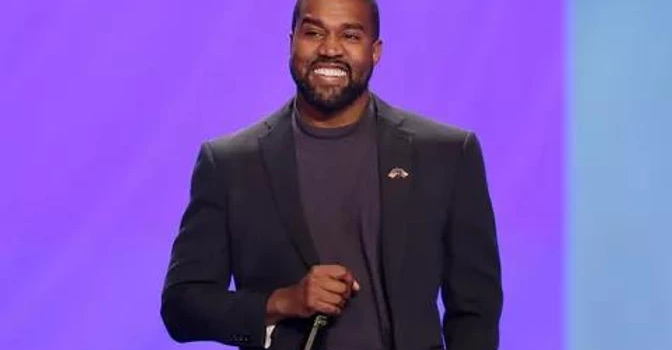
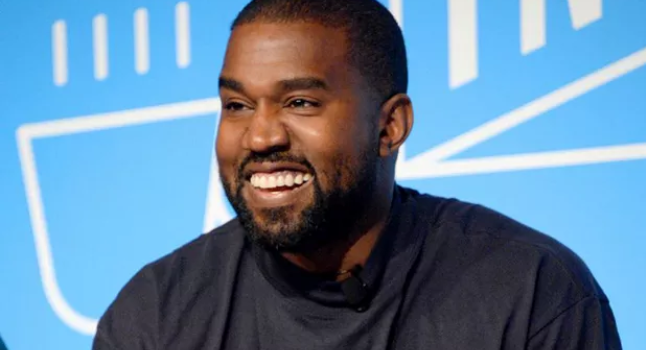
Kanye West, the entertainment mogul who urges listeners in one song to “reach for the stars, so if you fall, you land on a cloud,” claimed Saturday he is challenging Donald Trump for the US presidency in 2020.

“We must now realize the promise of America by trusting God, unifying our vision and building our future. I am running for president of the United States! #2020VISION,” the born-again billionaire rapper tweeted as Americans marked Independence Day.

West offered no further details on his supposed campaign, four months before the November election, and it is unclear if he has officially registered to run for office.

Hundreds of thousands of Twitter users reacted to the star’s announcement and “Kanye” shot to become the top trending term on the platform, although many questioned whether the volatile rapper would go through with his plan and others claimed it was a publicity stunt.

His wife, reality star Kim Kardashian, replied with a US flag emoji, while Tesla CEO Elon Musk wrote: “You have my full support!”

The 43-year-old has mentioned running for president several times and he said last year he would run for president in 2024.

West long ago broke ranks with most of the left-leaning entertainment industry to loudly voice his support for Trump.

In 2018, they met in the Oval Office — a surreal tete-a-tete that included a hug from the rapper as well as an on-camera rant featuring an expletive not often repeated for the White House press corps.

That year, West also delivered a lengthy soliloquy to a president who many deem racist, telling him he loved him — to the dismay of many Democrats and fellow artists.

But in 2019, during an interview with Zane Lowe of Apple Music’s Beats 1 show, he said his support for Trump had been a way to razz Democrats — and announced his own presidential ambitions.

“There will be a time when I will be the president of the US, and I will remember… any founder that didn’t have the capacity to understand culturally what we were doing.”

It was unclear to whom the artist was referring.

The announcement came days after West, who has taken a very public turn towards Christianity in recent years, released a new song, “Wash Us In the Blood,” along with an accompanying video including imagery from recent anti-racism protests.

West has also opened up about his mental health, particularly his struggle with bipolar disorder, telling talkshow host David Letterman he feels like he has “a sprained brain, like having a sprained ankle.”

Since 2018, Kardashian has formed her own contacts with the White House as she champions criminal justice reform: she has successfully lobbied Trump to pardon a sexagenarian woman for a non-violent drug offense.

For weeks now Trump, criticized for his response both to the coronavirus pandemic and to anti-racism protests, has been lagging in the polls behind his Democratic rival, Joe Biden.

There was no immediate response to West’s announcement from either candidate Saturday.

Source: Punch

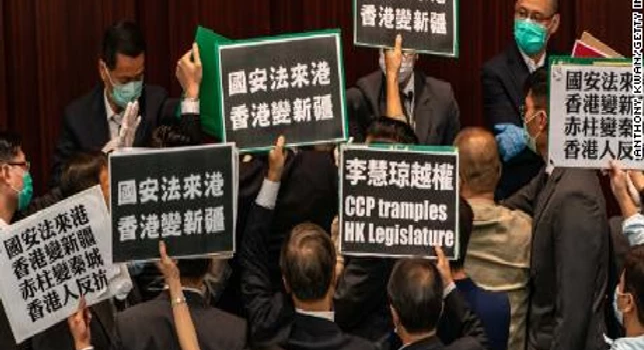
The United Kingdom said Wednesday it would offer a path to citizenship for eligible Hong Kong residents and condemned China’s new security law as a threat to the city’s freedom.

UK Foreign Secretary Dominic Raab said in an on-camera interview that after “carefully” assessing the contents of the new national security law, it constitutes “a clear violation of the autonomy of Hong Kong, and a direct threat to the freedoms of its people.”

He said it was therefore “a clear and serious violation” of the Sino-British Joint Declaration, which laid the groundwork for the city’s handover from British to China in 1997 and stated that Hong Kong’s existing system of government would remain in place for 50 years.

China’s central government on Tuesday night imposed a sweeping national security law that critics say has stripped the city of its autonomy and precious civil and social freedoms, and cements Beijing’s authoritarian rule over the territory.

Speaking during Prime Minister’s Questions, Johnson said: “The enactment and imposition of this national security law constitutes a clear and serious breach of the Sino-British joint declaration.

It violates Hong Kong’s high degree of autonomy and is in direct conflict with Hong Kong basic law.

“The law also threatens the freedoms and rights protected by the joint declaration.

“We made clear that if China continued down this path we would introduce a new route for those with British National Overseas status to enter the UK, granting them limited leave to remain with the ability to live and work in the UK and thereafter to apply for British citizenship — and that is precisely what we will do now.”

The UK’s Foreign Office said in a news release that “this new bespoke immigration route” would mean eligible Hong Kong residents could move to the UK without the current six month limit, and would have five years limited leave to remain, with the ability to live and work in the UK.

“After these five years, they will be able to apply for settled status and, after a further 12 months with that status, apply for citizenship,” the release said.

It said new route will be implemented in the coming months, with exact date and further details to be announced in due course. “In the meantime, we will ensure British National (Overseas) citizens who wish to come to the UK will be able to do so, subject to standard immigration checks,” it added.

“This a grave and deeply disturbing step,” Raab said in a statement to the House of Commons Tuesday.

He said it was “depressing but necessary” to report that it was “a clear and serious breach of the joint declaration.”

He called the new legislation “a sad day for the people of Hong Kong.”

As of February 24, 2020, there were 349,881 holders of BNO passports and the UK government estimates there are around 2.9 million BNOs currently in Hong Kong.

Source : CNN

Nigerian-British designer Mowalola Ogunlesi has been appointed as the Design Director of Kanye West’s Yeezy Gap initiative.

In a post to Instagram, Ogunlesi shared the exciting news regarding her new role. “Design Director of Yeezy Gap,” she wrote alongside a photo of the logo for Yeezy Gap.

On Friday (June 26), ‘Ye announced his latest business venture. As part of the agreement, Gap is expected to earn $1 billion annually within the first five years. “We are excited to welcome Kanye back to the Gap family as a creative visionary, building on the aesthetic and success of his Yeezy brand and together defining a next-level retail partnership,” the Global Head of Gap Brand Mark Breitbard said in a press release.

The 10-year partnership will include items “at an accessible price point” for men, women and kids. For sneaker lovers, however, West doesn’t plan on adding footwear to the equation.

“If anyone knows Kanye they know how much the Gap and Yeezy means to him so this partnership is his dream come true!” the father of four’s wife Kim Kardashian took to Twitter on Friday (June 26). “I am so proud of him. You guys are going to love what they have in store for everyone! From working at the Gap to this partnership is so inspiring.”

In addition to hiring Ogunlesi, West has more things up his sleeve. In a post to Twitter, he revealed that he is working on an animated TV series with his Kids See Ghosts collaborator Kid Cudi, which is inspired by their joint project. The Chicago native is also working on a “Dr. Dre version” of his 2019 album Jesus Is King.

In a viral video captured by Snoop Dogg, the “Sensual Seduction” rhymer shared footage of himself in the studio with Dr. Dre and West. “Kanye West got some hot music. Shhhhh,” Snoop whispered. “Only I can get exclusive footage…It’s finna come out. Dr. Dre touched it.”

Check out Mowalola Ogunlesi’s post regarding the exciting news below.