
The UK economy suffered its biggest slump on record between April and June as coronavirus lockdown measures pushed the country officially into recession.

The economy shrank 20.4% compared with the first three months of the year.

Household spending plunged as shops were ordered to close, while factory and construction output also fell.

This pushed the UK into its first technical recession – defined as two consecutive quarters of economic decline – since 2009.

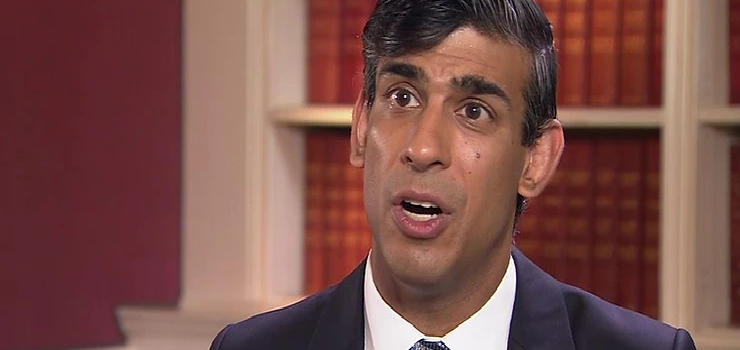
Chancellor Rishi Sunak told the BBC that the government was “grappling with something that is unprecedented” and that it was “a very difficult and uncertain time”.

But shadow chancellor Anneliese Dodds blamed Prime Minister Boris Johnson for the scale of the economic decline, saying: “A downturn was inevitable after lockdown – but Johnson’s jobs crisis wasn’t.”

Is there any sign of things getting better?

The Office for National Statistics (ONS) said the economy bounced back in June as government restrictions on movement started to ease.

On a month-on-month basis, the economy grew by 8.7% in June, after growth of 1.8% in May.

But Jonathan Athow, deputy national statistician for economic statistics, said: “Despite this, gross domestic product (GDP) in June still remains a sixth below its level in February, before the virus struck.”

Which parts of the economy have suffered most?

The ONS said the collapse in output was driven by the closure of shops, hotels, restaurants, schools and car repair shops.

The services sector, which powers four-fifths of the economy, suffered the biggest quarterly decline on record.

Factory shutdowns also resulted in the slowest car production since 1954.

The economic decline was concentrated in April, at the height of lockdown.

Clothes stores, bookshops and other non-essential retailers opened their doors in England on 15 June, while construction work jumped after large declines in the previous two months.

The chancellor has said the economic slump will lead to more job losses in the coming months.

Official jobs figures released on Tuesday showed the number of people in work fell by 220,000 between April and June.

But in a BBC interview on Wednesday, Mr Sunak did not waver on ending the government’s furlough scheme of job subsidies, which is winding down and is due to end entirely after October.

“I think most people would agree that that’s not something that is sustainable indefinitely,” he told the BBC.

Source: BBC
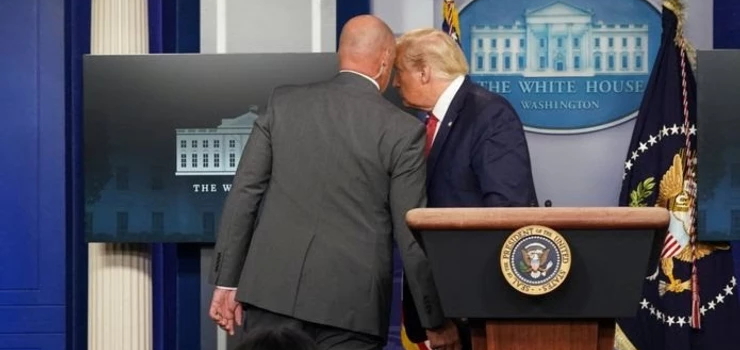
US President Donald Trump was escorted out of a news conference after Secret Service agents shot and wounded a man who claimed to be armed outside the White House.

The Secret Service said the incident happened one block from the compound, when an officer fired on the suspect who had run “aggressively” towards him.

An agent then walked on stage as Mr Trump was speaking and led him away.

The president returned minutes later to say the situation was under control.

The US Secret Service said the incident happened on Monday on the corner of 17th Street and Pennsylvania Ave – outside the White House perimeter.

It said a 51-year-old man, who has not been identified, approached the officer, told him he had weapons and assumed a “shooter’s stance”, whereupon the officer shot him in the torso.

The Secret Service did not say whether the man was armed. It added that “both the officer and the suspect were then taken to hospital”, and that “at no time during this incident was the White House complex breached”.

After Mr Trump and his staff left, doors to the briefing room were locked with the journalists inside.

When the president returned nine minutes later, he said: “Law enforcement shot someone, it seems to be the suspect.”

He said he did not know if the person harboured any ill intentions towards him.

“It might not have had anything to do with me,” the president said

.A journalist asked Mr Trump if he was rattled by the events. He replied: “Do I seem rattled?”

The president added: “It’s unfortunate that this is the world, but the world’s always been a dangerous place. It’s not something that’s unique.”

The District of Columbia fire department said a man suffered serious or possibly critical injuries, according to the Associated Press.

The news agency also reported that authorities were looking into whether the individual has a background of mental illness.

Source : BBC

A musician in Kano State has been sentenced to death by hanging for blaspheming against the Prophet Muhammad.

The Kano Upper Shari’a Court sitting at Hausawa Filin Hockey sentenced 22-year-old Yahaya Sharif to death by hanging.

The judge, Aliyu Kani, gave the verdict on Monday after finding Mr Sharif guilty as charged. He was convicted based on Section 382 (b) of Kano penal code of 2000.

Mr Sharif, a resident of Sharifai in Kano metropolis, was accused of committing blasphemy against the prophet of Islam in a song he circulated via WhatsApp in March 2020.

Following the incident, protesters burnt down the singer’s family home and led a procession to the Kano Hisbah command’s headquarters. The Hisbah is a Kano State-owned security outfit that enforces the Shariah law.

.An MP has called for a “system change” after she was stopped by police while travelling in a car in east London.

Former shadow equalities minister Dawn Butler accused the Met Police of racial profiling after the stop on Sunday.

Labour MP Ms Butler told BBC Breakfast she had agreed to meet local police commanders to discuss “taking the bias out of the system”.

The Met said the stop was a mistake caused by an officer incorrectly entering the car’s registration number.

Ms Butler said it had been 20 years since the Macpherson report into the murder of Stephen Lawrence, which described the Met Police as “institutionally racist”.

“It’s about time we changed the system so it works for everyone and it’s effective,” she said.

The MP said institutional racism was “not about saying every single police officer is racist”.

“If you see black people in a car and you automatically assume that they are criminals there is a problem there,” she said.

“That’s why you have to address the system that is currently biased against black people.”

Prime Minister Boris Johnson said the police should treat people with “fairness and equality”.

He said: “The police have made a statement saying that they made a mistake.

“They have spoken to the occupants of the car but it’s obviously very, very important that the Met continue to do everything that they can – as indeed they do – to show that they are serving every part of our country, every part of our community, with fairness and equality.”

Butler said the BMW that was stopped on Sunday was being driven by a male friend, who is also black, and it was pulled over by two police cars.

She said officers said the car was registered in North Yorkshire and took the keys while checking the registration.

They then admitted there had been a mistake, that it was registered to the driver and apologised, she said.

Ms Butler told the BBC: “I still don’t know why they punched the number plate into the system.

“I don’t know what raised their suspicion. All I know is I’m black, my friend was black and he has a fairly decent car.”

a statement the Met said “one of the occupants” had been contacted by a senior officer and they had discussed “subsequent interaction as well as feedback regarding the stop”.

It added: “We would welcome the opportunity to discuss this matter further with the occupants if they wish to do so.”

The force’s statement did not explain why the car registration was entered in the first place.

Susan Hall, Conservative leader on the London Assembly, has called for the Met Police Commissioner to release body worn camera footage from officers at the incident.

Ms Hall tweeted : “If Dawn Butler wants to play politics with police officers doing their job, Londoners should have all the facts.”

‘Listening to concerns’

Ms Butler said she had already spoken to her local borough commander and further meetings were planned.

The MP also said stop and search needed to be revised to a system with “better outcomes”, but “it’s going to take an intense amount of work”.

Ch Supt Roy Smith tweeted on Sunday to say he had spoken to Ms Butler and she had given “a very balanced account of the incident”.

The officer said the force “are listening” to concerns she had about the stop and the officers involved.

The Independent Office for Police Conduct is investigating whether officers in England and Wales racially discriminate against ethnic minority people.

The latest official statistics for stop and search showed a disparity rate of 4.3 for all black, Asian and minority ethnic people and 9.7 for black people.

Police have the power to stop and search anyone, including stopping vehicles, if an officer has reasonable grounds to believe someone has been involved in a crime or is in possession of a prohibited item.

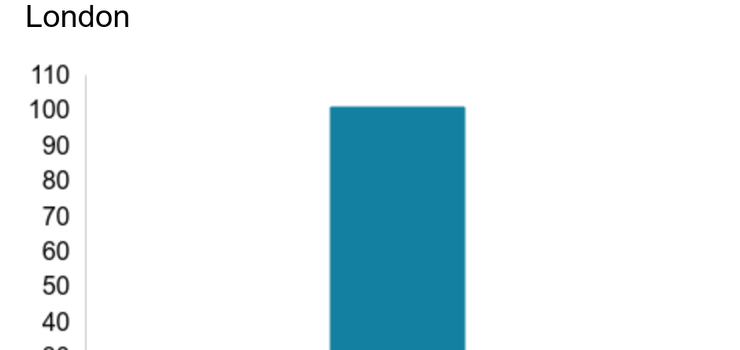
BBC analysis shows that from August 2019 to July 2020 there were 101 stop and searches for every 1,000 black people in London, compared to 23.2 for every 1,000 white people and 28.7 per 1,000 Asian people.

Source: BBC

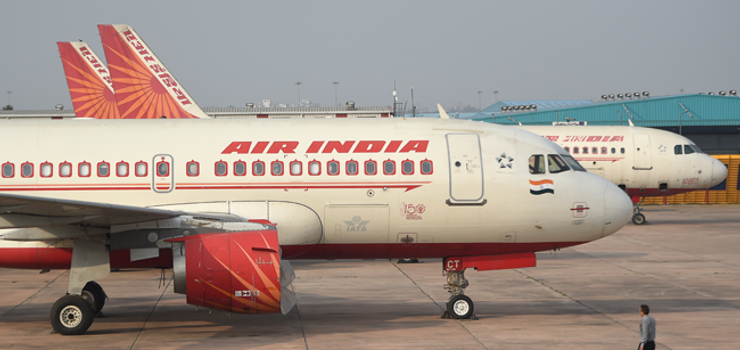
At least 14 people were killed and 15 others were seriously injured Friday when an Indian passenger jet skidded off the runway after landing in heavy rain, officials said.

Air India Express said more than 190 passengers and crew were on board the plane, which left from Dubai and landed at Kozhikode airport in the southern state of Kerala.

Television pictures showed part of the fuselage of the jet ripped apart, although there was no sign of any fire.

“I can confirm at least 14 deaths overall. Another 15 passengers have critical injuries. It is still a developing situation,” senior local policeman Abdul Karim told AFP.

“We have at least 89 people, many of them with serious injuries, admitted at different Kozhikode hospitals. The ambulances are still coming in,” said Sujith Das, another senior police official.

“We have been told that all those who have survived the crash also have some form of injuries.”

One of those killed was one of the two pilots, a Kerala state deputy said.

Aviation regulator DGCA said the plane skidded off the end of the runway and “fell down in the valley and broke down in two pieces”.

An Air India Express spokesperson said the aircraft appeared to have overshot the runway.

One television channel reported there had been a problem with the jet’s landing gear.

Air India Express said in a statement that there was “no fire reported at the time of landing.”

It said there were 174 passengers, 10 infants, two pilots and five cabin crew on board the aircraft.

“As per the initial reports, rescue operations are on and passengers are being taken to hospital for medical care,” it said.

An emergency services official, speaking on condition of anonymity, told AFP: “Rescue operations are on but the rains are making it difficult.”

Television pictures showed emergency services personnel working in the dark and spraying the wreckage with water.

Prime Minister Narendra Modi tweeted his condolences.

“My thoughts are with those who lost their loved ones. May the injured recover at the earliest… Authorities are at the spot, providing all assistance to the affected,” Modi said.

The last major plane crash in India was in 2010 when an Air India Express Boeing 737-800 from Dubai to Mangalore overshot the runway and burst into flames.

The crash killed 158 people and left eight survivors.

Kerala has been battered by heavy rains in recent days.

At least 15 people were killed on Friday after a landslide triggered by heavy rains flattened a row of huts elsewhere in the state.

Around 50 other people were feared trapped in the debris. The dead included two children.

Source: AFP

Fireworks as Buhari’s spokesman, #RevolutionNow lawyer clash on TV

There was a mild drama on Channels Television’s Sunrise Daily programme on Thursday when the President’s most senior spokesman, Femi Adesina; and the National President of Revolutionary Lawyers Forum, Mr Tope Akinyode, exchanged words over the #RevolutionNow protests that took place in various parts of the country on Wednesday.

Akinyode, who took part in the protests which were disrupted by security operatives, said the aim of the demonstrations was to demand good governance, poverty eradication, a stop to the insecurity and many other issues.

In his response, however, Adesina described the protests as an irritation and a child’s play.

He said, “Well, was it really a protest? By my estimation, it just seemed like a child’s play because protests by their very nature are spontaneous things, mass things. These are just a sprinkle of people trying to be funny. As far as I am concerned, it is nothing to worry about.

“A revolution is always a mass thing, not a sprinkle of young boys and girls you saw yesterday (Wednesday) in different parts of the country. I think it was just a funny thing to call it a revolution protest.”

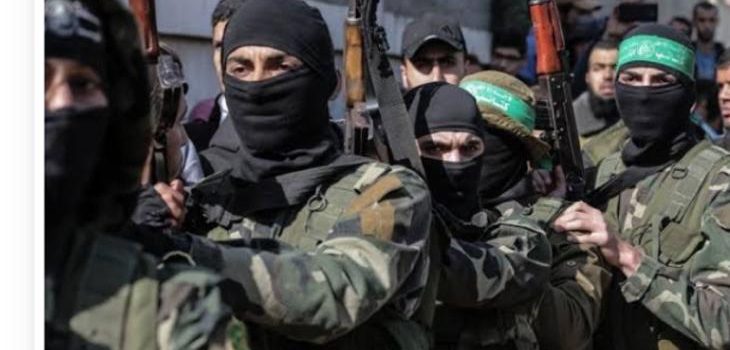
The United States Africa Command has said terrorist groups including the Islamic State, Al-Qaeda, Boko Haram and Al-Shabaab, in the last five years, shut down over 9,000 schools in different African countries including Nigeria.

It said the insurgents are replacing the schools with theirs where they brainwash students with damaging ideologies.

Boko Haram in 2018 abducted over 100 schoolgirls from Government Girls Technical College, Dapchi, Yobe State. The sect had earlier in 2014 abducted over 270 schoolgirls from the Government Girls Secondary School in Chibok, Borno State.

Some of the kidnapped victims have been returned after they were sexually violated while a number of them never returned but have been conscripted as wives and allies of the sect.

Osimhen record deal good for African football—Drew Uyi

The transfer of Super Eagles striker, Victor Osimhen, to Series A giants, Napoli, has been described as a good development for African football by FA licensed football agent, Drew  Uyi

Noting that the deal is not only good because of the highest transfer fee for an African player in history, Uyi said the contract is super because the Nigerian striker has the opportunity to harness the value of his image rights, which he retains.

Uyi said: “Because he didn’t cede his image rights to Napoli, Osimhen is now able to exploit his image rights and make the most out of his personal brand, securing intellectual property rights for his name, images and logos

He can also get hitch-free endorsements and sponsorship with the help of a seasoned and experienced brand manager. Such persons can help derive huge financial benefits that can measure up to his salary.”

Speaking further, Drew Uyi urged African footballers “to learn from the fact that Osimhen demanded a share of the rights to his image.

“Napoli always demand 100 percent control of image rights no matter how big the player is. It shows that he knows his worth.

For a long time, Africans have not got their true market worth. It’s high time they started getting their worth like their foreign counterparts.

“I am personally more than happy for this deal, as I have been a strong advocate for athletes branding for the last five years for Africa footballers through all possible medium, especially my Instagram and Twitter handles.

“With over two decades managing celebrities, comprising  artistes, actors, comedians, corporate brands to athletes, I have the wherewithal to make deals happen for players.”

While noting that the goals are to empower, educate athletes and turn them into marketable brands,  Ogbomoide Uyioghosa, an international brand strategist, said an athlete’s brand was the most important investment an athlete can make during his career.

According to Uyi,  “LeBron James is arguably the greatest basketballer of all time, but what many don’t know is that he’s arguably the best-branded athlete in history.

All that was possible because he has a team that has a unique vision and take care of his business while he focuses on scoring points and winning games

Osimhen’s transfer to Napoli is a good benchmark. African athletes should look beyond what the figure of their salary pay packet.

“They should look at building a powerful brand. It shouldn’t stop here. I would definitely love to see more of this.”

The National Universities Commission (NUC) said it is collecting data from universities to assess their readiness for resumption of academic activities.

The commission also said efforts are ongoing to resolve the strike by the Academic Staff Union of Universities’ (ASUU) that threatens to further delay the resumption of academic activities in the universities.

The Executive Secretary of NUC, Abubakar Rasheed. said this during a press conference on the contributions of Nigerian universities to the national response to COVID-19 in Abuja on Tuesday.

Nigeria closed its tertiary institutions along with lower schools in March due to the coronavirus outbreak.

Mr Adamu, who was represented at the event by the deputy executive secretary Academics, Suleiman Yusuf, said the Commission is working with universities to discuss preparation that should be in place before reopening.

According to him, universities not under ASUU watch can go back to classes once they have put the necessary guidelines in place.

“We gave a template to vice-chancellors of all universities requesting them to suggest to us what kind of protocols and strategies they are putting in place in the various institutions. We are collecting some of the responses which have already started coming in and at the end of the day the picture should emerge about the extent to which our universities are prepared to reopen for academic activities,” he said.

ASUU commenced its warning strike on March 9 and declared an indefinite strike on March 23.

ASUU is embarking on the strike over the non-payment of salaries of their members who failed to enrol into the federal government’s IPPIS, a payroll software mandated for all public officials.

Mr Rasheed said over 32 universities in the country are involved in research aimed at mitigating the COVID-19 pandemic.

He said the performance of the African Centres of Excellence has proved that world-class research and development work is possible in Nigeria.

“Particularly, the Centre for the Genomics of Infectious Diseases at the Redeemer’s University, Ede in Sequencing SARS-CoV-2 virus, the collaborative development of vaccines with the University of Cambridge and as a pioneer national testing and screening centre and the other ACES in ABU, BUK, UNILAG, UNIBEN, UNIPORT and UNIJOS that also served as national testing and screening centres have proved that world-class Research and Development work is possible in Nigeria,” he said.

University of Jos which is leading in herbal and natural product development could do more if the federal government releases more funds to such institutions for research purposes.

“As in many other parts of the world, the pandemic has challenged our knowledge system, which has proved inadequate and insufficiently robust enough to respond to the challenges. Only a few institutions have been able to utilise the open and distance learning system to keep students engaged while the pandemic lasted and only few laboratories continued with research and development activities,” he said.

News men reported how the federal government in June advised tertiary institutions in Nigeria to put preventive measures against COVID-19 in place before they announce their re-opening.

The preventive measures include Installing hand-washing facilities, equipment for body temperature checks and others.