

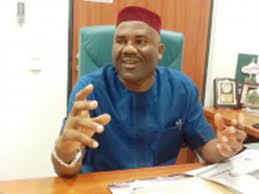
Newly appointed Chairman of the House of Representatives Committee on Renewable Energy, Hon. Afam Victor Ogene, has assured that the committee would lead the charge in formulation of vital policies for a new direction in the nation’s energy needs and enabling technologies, away from the dwindling fossil energy, to a more sustainable and cleaner renewable energy.

Ogene, who is also the Labour Party caucus leader in the House, gave this assurance in a statement in Abuja on Sunday, to appreciate the Speaker, Rt. Hon. Tajudeen Abbas, deputy Speaker, Benjamin Kalu and the leadership of the 10th Assembly, for finding him worthy of the chairmanship of this important committee.

He said that with the fast dwindling global fossil fuel reserve and the increasing dangers associated with it, especially as regards its impact on the environment and climate change, renewable energy is the future and Nigeria must step up and be more intentional in investing in the renewable energy sector and technologies.

The lawmaker, who represents Ogbaru Federal Constituency of Anambra state said that “Scientists and experts have predicted that we will deplete the Earth’s fossil fuel reserves in as few as 50 years, so, investing now in renewable energy is one way to ensure a cleaner, greener, and more sustainable future.”

He also commended President Bola Tinubu for thinking towards that direction, by his appointment of Mrs. Olu A. Verheijen, an expert in renewable energy, as Special Adviser on Energy, and promised that his committee would work in close synergy with the executive in finding a lasting solution to the nation’s intractable electricity power challenges.

Hon. Ogene also proposed that renewable energy should have a full fledged ministry of its own, in order to give it the required attention in exploration of alternative sources of energy and also drive the investment in the emerging technologies that would ensure meaningful contribution to the nation’s energy supply from that sector.

He said further: “I want to sincerely thank the leadership of the House of Representatives under the able leadership of the Rt. Hon.Tajudeen Abbas, for trusting me with the responsibility of leading this important Committee on Renewable Energy. It is a responsibility I accept with a great sense on honour and servant leadership for the great people of Nigeria, who we represent in the parliament.

“It is a call to duty, and in line with the legislative agenda of the 10th Assembly, we shall always prioritise on the interest of the people at all times in carrying out our oversight and lawmaking responsibilities, for the overall good of the nation.”

Hon Ogene, a ranking legislator was also recently appointed to chair an Ad-hoc Committee of the House to investigate the failure of the Federal Mass Transit Schemes in Nigeria.
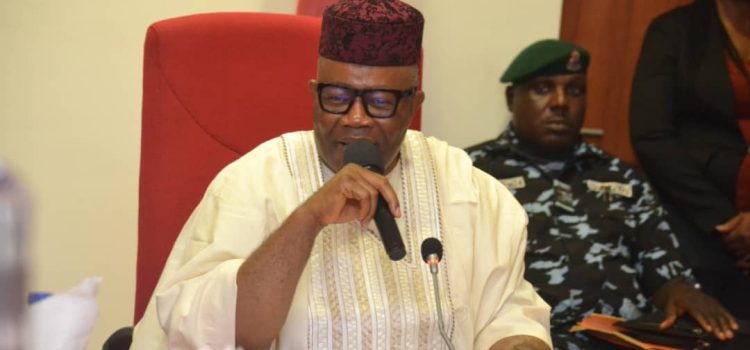
The President of the Senate, Senator Godswill Akpabio has decried the filthy environment and insecurity at the National Assembly complex as the 10th NASS settle for legislative work.

Indeed, Akpabio said lawmakers are no longer safe because of infiltration of people who have no business in the complex, saying lawmakers have lost their telephones to hoodlums who position themselves in front of offices of honourable members and senators.

Specifically, he berated the National Assembly Service Commission (NASC) for channelling all resources on staff allowances and emoluments.

Akpabio spoke on Friday when he played host to the management of the National Assembly Service Commission (NASC) in Abuja.

The President of the Senate was reacting to an address by the chairman of NASC, Engr. Ahmed Amshi who said the commission is facing difficulty in the payment of allowances of staff.

According to Akpabio “we are aware that the entire complex is under renovation. We must also look after the environment. It is not all about staff”.

Continuing “we will like to see a cleaner environment and secured complex.

“A lot of senators have lost their telephones because of influx of people into the complex”.

He said the National Assembly is the symbol of democracy, stressing that the 10th Senate is poise to make landmark through legislation.

“I congratulate you on the steps you have taken to boost the morale of staff” he said.

He however harped on the environment and security of the complex.

Earlier, Amshi congratulated the Senate president and the deputy Senate president, saying they are experienced public officers.

He appealed to lawmakers to send the list of their legislative aides for documentation.

“By September let us finish the issue of legislative aides” Amshi said.

As CIVIC marks its 20th anniversary

The National Human Rights Commission (NHRC) has urged the government and other stakeholders to rally around and protect civilians and human rights of all kinds, saying that doing so remains a sacred duty of not only the government but also non-state actors.

The Executive Secretary of the Commission, Chief Tony Ojukwu OFR, SAN who stated this in Abuja Tuesday at the workshop and exhibition on the protection of civilians and human rights in Nigeria noted that “It is for this reasons that the NHRC and other stakeholders have worked on, and submitted to the Federal Government, a draft Policy on the Protection of Civilians.

The learned Silk explained that “This policy is aimed at addressing all issues related to the protection, treatment, and rehabilitation of civilians as well as remedial and accountability measures for perpetrators of violence and human rights violations”.

.

According to the Chief Human Rights Officer of Nigeria, the draft policy is applicable to: the Nigerian government, including, but not limited to the armed forces, security agencies, law enforcement agencies, intelligence services, and any other group conducting operations in conjunction with, on behalf of, or with the support of the government and (or) sub-national government during all armed conflicts, security operations, internal security operations and all military operations involving the use of force.

The draft policy, the Executive Secretary noted, seeks to protect civilians in conflicts reduce or eliminate civilian harm through planning and early warning assessment of civilian harm during and after operations, harm acknowledgment, and remedial service provision.

“We are hoping that in response to the upsurge in violence, the new administration will approve this policy. The NHRC commits to playing a leading role in the implementation of this policy and to ensure that all stakeholders play their parts in the protection of civilians”, stated.

He said the major outcome of this workshop is the drafting of a policy brief on the Rights-based Approach to the Protection of Civilians in Nigeria: Issues, Challenges, and Options which will serve as a roadmap for the new administration and heads of security agencies for the protection of civilians in Nigeria.

Also, the NHRC Boss thanked the Centre for Civilians in Conflict and the European Union for their support of the hosting of this event even as he congratulated CIVIC on their 20th anniversary “for which we are today launching a photo exhibition on the works of CIVIC in the North East”.

Similarly, the Solicitor General of the Federation and Permanent Secretary, the Federal Ministry of Justice, Mrs. Beatrice Jeddy-Agba said that the Ministry is committed to working with stakeholders towards addressing the challenges of civilians in conflict-related areas such as gender-based violence, recruitment of child soldiers, abduction, early/forced marriages, and sex slavery.

The Permanent Secretary who was represented by a Senior Staff of the Ministry, Ms. Jamila Akaaga Ade said that recently a handover Protocol was signed by the Federal Government with the United Nations and the Lake Chad Basin region to reaffirm the government commitment to prevent or reduce the detention of children encountered by military and security forces during armed conflicts.

In his address, the Country Director of CIVIC, Dr. Benson Olugbuo regretted that over 2.2 million people have lost their lives as a result of the Boko Haram insurgency in North East Nigeria, adding that in the aftermath of the conflict, many schools were closed and several women and children displaced.

He therefore urged the government and other stakeholders to consider a renewed and holistic approach to protecting civilians in conflict, which will among other things build trust and confidence among civilians affected by conflicts.

He also commended the efforts of the NHRC in playing a leading role in the development of the National Action Plan which touches on the overall strategy to bring about an all-round development and human rights protection in the Country.

Other participants at the occasion are the representative of the Chief of Defense Staff (CDS), Air Commodore A.O. Akinsanya, and Interim Executive Director CIVIC, Jude Udo Ilo etc.

Chairman of the Nigerian Governors Forum, Governor AbdulRahman AbdulRasaq Wednesday in Abuja stressed the need for deeper collaborations between the United Nations and the state Governments in order to achieve human capital development, revenue generation, and general economic growth.

The Kwara State Governor stated this during the meeting of the forum in Abuja when they played host to the United Nations Under-Secretary General Hajia Amina Mohammed and Pakistani female education advocate and 2014 Nobel Prize winner Malala Yousafzai.

While harping on the need for synergy between both parties, Gov AbdulRahman also emphasised that each of the development agenda has far-reaching implications for good governance, national development, and general wellbeing of the people, especially at subnational levels.

He explained the importance of deeper ties” The NGF values collaboration and this is why we will always harvest divergent views on key national issues and work in harmony with all the players, including development partners and multilateral organizations, to drive growth and pursue the interest of our people.

“We will strengthen our collaboration with all the stakeholders and development partners from the United Nations, National Emergency Management Agency, CBN, FIRS, Ministry of Finance, and many other key state actors.

“I thank my esteemed colleagues for gracing the meeting. I also appreciate all our guests for honouring our invitations, and their willingness to partner with the NGF on critical issues of development.

Earlier Malala Yousafzai, a Pakistani female education activist, who visited the Presidential Villa, Abuja, held a meeting with the Vice President Kashim Shettima in which she discussed girl-child education.

Malala was the 2014 Nobel Peace Prize winner at 17 and the world’s youngest Nobel Prize laureate. She is also the UN Messenger of Peace.

The education activist, accompanied by UN Deputy Secretary-General, Amina Mohammed, told State House correspondents that visiting Nigeria was part of activities to mark her 26th birthday celebration.

“We know that there are more than 120 million girls who do not have access to education right now, and just as people spoke out about my education, I want them to think about the education of other girls as well.

“ In Nigeria, I am here because girls’ education is important here; it will determine the future of Nigeria.

“ So, I am here because I want to bring attention to those issues; I am here to speak as well and share my thoughts with the communalities, and also lucky that I was able to meet girls in Abuja.’’

“I would ask here in Nigeria that all governments of states; all party members make the commitment to ensure that every child in Nigeria has access to a complete education, which includes senior secondary education as well.

“That every child has access to free and quality education, and the second I ask is that we make full financial commitment to ensure that no child is left behind in this country.’’

Malala said she had been to Nigeria three times and expressed optimism that the girl-child had bright prospects.
She lauded the commitment of the government and other stakeholders to improving girl-child education.”

On her part, Mrs Mohammed said that Malala’s visit was in advancement her advocacy for girl-child education.
She pointed out that by the high number of out-of-school children in Nigeria, Malala should be an inspiration for relevant authorities to address the challenge.
“Ten years ago, Malala made her speech at the UN; she is the UN Peace Messenger; this time around, you decided on her 10th anniversary she wanted to make the advocacy for education here in this country.

“We have a large number of out-of-school children; we know the quality of education in the country; this is an advocacy to an administration that is coming in; that believes in education is an important timing.