
Early results from the US presidential election, pitting Donald Trump against Joe Biden, show a tight race in the potentially pivotal race of Florida.

With more than 80% of votes counted in Florida, Mr Trump, the Republican incumbent, was neck-and-neck with Mr Biden, the Democratic challenger.

It is too early to project who won in several other key states – Georgia, Pennsylvania, Ohio and North Carolina.

The vote caps a long and bitter campaign amid the coronavirus pandemic.

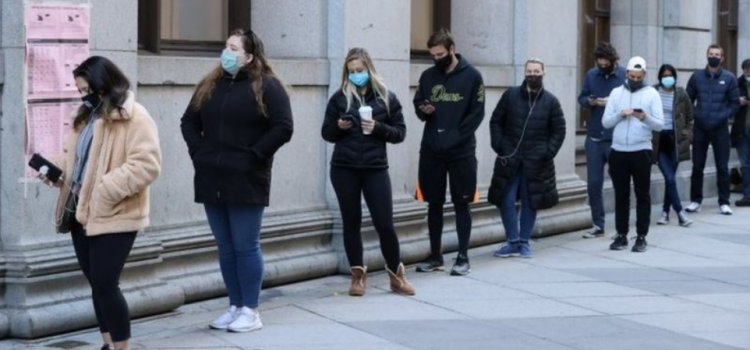
More than 100 million people had already cast their ballots in early voting.

The US appears on course for its highest turnout in a century. The first projections are expected shortly from states which are solidly Democratic or Republican.

Control of Congress is also at stake. As well as the White House, Republicans are vying to hang on to a Senate majority.

The House of Representatives is expected to stay in Democratic hands.

What are the results so far?

After polling stations closed across the US East Coast, Pennsylvania, Georgia, North Carolina and Ohio looked as though they could go either way in the White House race.

Both Florida and Pennsylvania are considered must-wins for Mr Trump if he is to be re-elected to a second term in office.

No surprises have emerged yet in the other states.

The BBC projects Mr Trump has won Indiana, Kentucky, Tennessee, Oklahoma and West Virginia, all as expected.

The BBC projects Mr Biden will win his home state of Delaware, along with Vermont, Maryland, Massachusetts, New Jersey and Washington DC.

CBS News, the BBC’s US partner, says South Carolina is leaning Mr Trump’s way, while Virginia is leaning Mr Biden’s way.

Voting ends on the US West Coast at 23:00 EST.

Mr Trump, who is watching the returns from the White House, is expected to address the nation later on Tuesday evening.

Projections are based on a mixture of exit poll data and, in most cases, actual votes counted – and are only made where there is a high degree of certainty.

National polls give a firm lead to Mr Biden, but it is a closer race in the states that could decide the outcome.

According to Anthony Zurcher BBC North American Reporter, Polls in the eastern half of the US are closing fast now. While Florida appears to be trending toward Donald Trump – on the back of better-than-expected performance among Hispanics in South Florida – attention will shift towards other battleground states.

Joe Biden has taken an early lead in Ohio, although the counties that have been reporting are Democratic ones. However, if he can do better than Hillary Clinton, who lost the state, it could give clues as to how he’ll perform in the nearby states that were much closer – Pennsylvania, Michigan and Wisconsin, in particular.

Georgia continues to look like a tossup, as does North Carolina. Both are pretty much must-wins for Trump. And Texas looms on the horizon. While Florida is the big electoral prize that has been a fixation for Democrats for decades, if Texas moves to the left, it could herald an even more earth-shattering electoral realignment.

In the US election, voters decide state-level contests rather than an overall, single, national one.

Appearing in his home state of Delaware, Mr Biden said he was “hopeful” and highlighted the “overwhelming turnout particularly of young people, of women”.

A senior Biden adviser told CBS News – the BBC’s US partner – that the Biden team “feel good”. Florida was in the balance, but Democratic numbers were strong in a swathe of swing states, including Wisconsin, Pennsylvania, North Carolina, Georgia and Arizona.

Speaking in Virginia, Mr Trump said he expected “a great night”.

An exit poll conducted by Edison Research and just published by Reuters suggests that four out of 10 voters nationally think the handling of the coronavirus pandemic in the US is “going very badly”.

A third of voters cited the economy as the issue that most concerned them, according to the poll.

Both candidates have been using election day as an opportunity to drive home the messages they have been hammering to voters for the last few weeks.

The two rivals have radically different policies on key issues. They have clashed bitterly during the campaign over how to handle the Covid-19 pandemic, and how to best handle the economy during this difficult period.

Mr Biden has accused Mr Trump of a haphazard response to the pandemic that he says has needlessly cost too many lives. But Mr Trump has downplayed the impact of Covid-19, saying the country is “rounding the corner”.

Mr Trump’s term has also been marked by contentious immigration policies.

Earlier on Tuesday, Mr Trump, sounding a little hoarse, spoke to Fox News by phone, saying he felt good about his chances of victory and predicting he would win “big” in key states such as Florida and Arizona.

“I think we have a really solid chance of winning,” he said. Asked when he would declare victory, he added: “When there’s victory. If there’s victory… there’s no reason to play games.”

Mr Biden also visited his childhood home in Scranton in Pennsylvania – a key swing state – and addressed a crowd in the town, saying: “We’ve got to restore the backbone to this country. The middle class built this country – Wall Street didn’t.”

Source: BBC News

US President Donald Trump and his Democratic challenger Joe Biden have spent the final hours of the White House race delivering their closing pitch to voters in critical states.

Mr Biden campaigned in Pennsylvania and Ohio, as Mr Trump toured the voting battlegrounds of Wisconsin, Michigan, North Carolina and Pennsylvania.

National polls suggest a firm lead for Mr Biden in Tuesday’s election.

But his lead is narrower in the handful of states that could decide the result.

More than 98 million people have already cast their ballots in early voting, putting the country on course for its highest turnout in a century.

In the US election, voters decide state-level contests rather than an overall single national one.

To be elected president, a candidate must win at least 270 votes in what is called the electoral college. Each US state gets a certain number of votes partly based on its population and there are a total of 538 up for grabs.

This system explains why it is possible for a candidate to win the most votes nationally – like Hillary Clinton did in 2016 – but still lose the election.

Tuesday’s vote comes amid the ongoing coronavirus pandemic. The US has recorded more cases and more deaths than any other country worldwide, reporting more than 81,000 new infections on Sunday alone.

As the nation counts down the hours to the vote, there are fears that pockets of post-election violence could break out. Businesses in the nation’s capital, Washington DC, and in New York City have been seen boarding up their premises due to concerns about unrest.

After a punishing schedule of rallies in six states on Sunday, President Trump sprinted through four more battleground states on Monday.

In North Carolina, he told supporters that “next year will be the greatest economic year in the history of our country”. The rally was postponed from Thursday due to Hurricane Zeta.

He touted numbers that he says “nobody even thought possible”.

The US economy saw record-breaking 33% growth in the third financial quarter of this year, following a record 31% contraction in the second. Economists warn the damage inflicted by the pandemic – the biggest decline in the US economy in more than 80 years – could still take years to overcome.

After North Carolina, Mr Trump headed to Scranton, Pennsylvania, the city where his opponent lived until he was 10. At a rally there he reminded his supporters that he won the state in 2016 despite polls suggesting he would lose.

Mr Biden also went to Pennsylvania where he was joined by singer Lady Gaga at a rally in Pittsburgh. Musician John Legend addressed voters with vice-presidential candidate Kamala Harris.

At a last-minute campaign stop in Ohio, Mr Biden repeated the core message of his campaign, telling voters that the race was about the soul of America. He said it was time for Mr Trump to “pack his bags”, saying “we’re done with the tweets, the anger, the hate, the failure, the irresponsibility”.

The race in Ohio is extremely tight. In 2016, Mr Trump won by more than eight points – currently, he has a 0.2% lead over Mr Biden, according to an aggregate of polls by RealClearPolitics.

On Monday, Mr Trump also held rallies in Traverse City, Michigan, and Kenosha, Wisconsin. Kenosha was rocked by violent protests in August after the police shooting of a black man.

In Traverse City he asked for the votes of black Americans.

His last rally of the campaign is due to be held in Grand Rapids, Michigan, before midnight.

On Sunday the candidates attacked each other on two of this campaign’s key themes – Covid-19 and racial tension.

The president and his campaign have meanwhile indicated they will sue to block the potentially pivotal state of Pennsylvania from counting postal ballots received three days after the election.

The US Supreme Court allowed a lower court ruling granting the extended deadline to stand, but several conservative justices signalled they might be open to revisiting the issue after the vote.

Mr Trump tweeted on Monday that the high court decision allowing ballots to be accepted three days after election day was “a very dangerous one”.

“It will allow rampant and unchecked cheating and will undermine our entire systems of laws. It will also induce violence in the streets. Something must be done!” Twitter added a warning label that the tweet might contain “misleading” information.

Legal fights over ballots have also been unfolding in Minnesota, North Carolina and Texas.

Mr Biden has already vowed to stop Mr Trump “stealing” the election.

The president is to host an election night party inside the White House with about 400 guests invited.

Up to 10,000 protesters are expected to gather on election night at Black Lives Matter Plaza and a park not far from the White House, according to CBS News.

Mr Biden and Ms Harris will watch the election night returns in the former vice-president’s hometown of Wilmington, Delaware.

Source: BBC

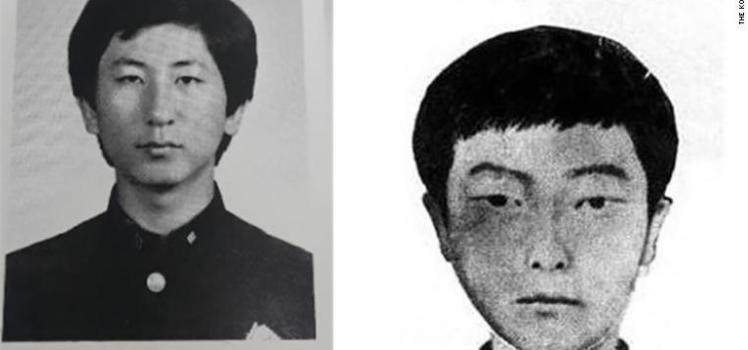
0A South Korean man admitted in court Monday that he murdered 14 women and girls three decades ago in one of the country’s most notorious serial killing cases — and said he was surprised he wasn’t caught earlier.

Lee Chun-jae confessed to the killings in front of Yoon, the only person ever convicted of any of the murders.

“I didn’t think the crimes would be buried forever,” 57-year-old Lee told a court in the South Korean city Suwon. He confessed to the murders last year to the police, but this is the first time he has publicly discussed the killings

Yoon — whose full name is not being published due to a South Korean law that protects the privacy of suspects and criminals — was released in 2008, after spending 20 years in prison for the 1988 rape and murder of a 13-year-old girl.

That murder is one of 10 killings that took place between 1986 and 1991, which are known as the Hwaseong murders after the area in which they took place.

For decades, the nine other murders went unsolved, and the cases were revisited in “Memories of Murder,” a 2003 film by “Parasite” director Bong Joon Ho.

Then last year, police launched a probe after new DNA evidence connected Lee with at least some of the killings. Yoon, who had for years protested his innocence, was granted a retrial, at which his lawyers are attempting to overturn his conviction.

At Yoon’s retrial Monday, which is ongoing, Lee said that when he was questioned by police at the time of the killings, he had a watch of one of the victims on his person. But police questioned him for not having his ID card on him — and he was set free soon after.

“I still don’t understand (why I wasn’t a suspect),” he said. “Crimes happened around me and I didn’t try hard to hide things so I thought I would get caught easily. There were hundreds of police forces. I bumped into detectives all the time but they always asked me about people around me.”

Lee said he didn’t have a reason for killing the 13-year-old and showed no emotion as he described how he killed her. “It was an impulsive act,” he said in court.

“I heard from someone that a person with a disability was arrested but I didn’t know which one he was arrested for as I committed many (crimes).”

Lee apologized to the family members of his victims — and Yoon.

“I heard that many people had been investigated and wrongfully suffered. I’d like to apologize to all those people,” he said. “I came and testified and described the crimes in hopes for (the victims and their families) to find some comfort when the truth is revealed. I’ll live my life with repent.”

Lee has been in prison since 1994, where he is serving a life sentence for the rape and murder of his sister-in-law that year, according to Daejeon court officials and South Korea’s Justice Ministry.

Lee cannot be prosecuted for the Hwaseong cases as the statute of limitations on those has expired.

At the time of the murders, Hwaseong was a rural area home to about 226,000 people scattered among a number of villages.

Violent crime was unusual in the area. Police poured resources into finding the serial killer, including logging more than 2 million days on the case — a record for an investigation in South Korea, according to news agency Yonhap.

Multiple people including Yoon, who had a limp from childhood polio and hadn’t finished elementary school, accused police of using torture during the investigation

In July, Gyeonggi Nambu Provicial Police Agency chief Bae Yong-ju admitted that during the initial investigation in 1989, police assaulted Yoon and coerced him into making a false confession. An official document noted that a witness was present during Yoon’s confession — but Bae said that was not the case.

“We bow down and apologize to all victims of the crimes of Lee Chun-jae, families of victims, and victims of police investigations, including Yoon,” Bae said Thursday, noting others had suffered from “police malpractice” during the initial Hwaseong investigation.

Bae also said authorities concluded Lee was responsible for all 10 killings that took place between 1986 and 1991 in Hwaseong.

Yoon said Monday that he needed time to digest what had happened in court. Yoon has previously said that he feels frustrated about all the years of injustice and wants to live the rest of his life as an innocent man.

“I want to clear my false accusation, and I want my honor back,” he said earlier this year.

Source: CNN

Britain’s Prime Minister Boris Johnson has announced a new four-week coronavirus lockdown in England, which will join several European countries in imposing the measure for a second time, as Slovakia took a different tack and began testing its entire population.Global infections are fast approaching 46 million, with close to 1.2 million deaths, and Europe is experiencing a dizzying spike in Covid-19 cases.Under-pressure governments on the continent are scrambling to contain the outbreaks, with the reimposition of restrictions sparking widespread exasperation and sometimes violent protests.“Now is the time to take action because there’s no alternative,” Johnson said. “We have got to be humble in the face of nature. In this country, alas, as in much of Europe, the virus is spreading even faster than the reasonable worst-case scenario of our scientific advisers.”Under the new lockdown, planned to start on Thursday and end on December 2, England’s population must stay at home except when exemptions apply, such as for work, education or exercise, while all but essential shops will close.The devolved governments of Scotland, Wales and Northern Ireland have already imposed partial lockdowns.Britain’s infections surged past one million on Saturday.Just minutes after Johnson, Portugal’s Prime Minister Antonio Costa announced a partial lockdown with 70 percent of the population going back under restrictions.Also on Saturday, Austria brought in a second lockdown of its own, while Greece declared a partial one. The new measures came just a day after France started its second lockdown and Belgium said it would tighten its measures.Italy has also already reintroduced some restrictions.This time around in Europe, there have been sometimes-violent protests against the measures.“This city will go bust. There will be nothing left of it,” Roger Stenson, a 73-year-old pensioner in Nottingham, said ahead of Britain’s lockdown announcement, echoing widespread concerns about the economic impact.“You know, closed shops… There will just be nothing left of it, that’s the problem.”– ‘I cannot vote for this man’ –The United States remains the worst-hit country in the world, with 9.1 million infections, more than 230,000 deaths and fresh spikes in many parts of the vast nation.Covid-19 has been one of the dominant campaign issues ahead of the presidential election on November 3, with millions of jobs lost and Donald Trump facing intense criticism over his handling of the pandemic.Trump himself got Covid-19, as did members of his family and staff, but he has been critical of lockdown measures over their economic impact, belittled mask-wearing by his Democratic challenger Joe Biden, and organised rallies with thousands of supporters despite warnings about the risk of transmission.The president has accused the media of overplaying the threat of the virus, but with tens of millions of Americans suffering because of the pandemic, some voters appear to be seeking an alternative.They include Kimberly McLemore, a 56-year-old from Florida who did not see Trump taking the pandemic seriously.“In good conscience, I cannot vote for this man,” the lifelong Republican told AFP, adding that both her parents, who are in their eighties, also voted for Biden — the first time they had voted for a Democrat.– ‘End our misery’ –With no vaccine yet available, governments have limited tools at their disposal to counter the spread of the virus.In Slovakia, the government has decided to take a different approach to other European countries and test its entire population of 5.4 million, with Prime Minister Igor Matovic describing the strategy as the EU nation’s “road to freedom”.But in the lesser privileged parts of the world with little or no infrastructure and resources, there are fewer options.In northwestern Syria, where around 1.5 million people displaced by war live in overcrowded camps or shelters with poor access to running water, some feel they do not stand a chance.“We’re scared of the disease but we don’t dare leave,” said 80-year-old Ghatwa al-Mohommad.“We’re so confused about what we should do. If only God would have us die and end our misery.”Source: AFP

US special operations forces on Saturday rescued an American citizen taken hostage by armed men earlier this week in Niger and held in northern Nigeria, the Pentagon said.

“U.S. forces conducted a hostage rescue operation during the early hours of 31 October in Northern Nigeria to recover an American citizen held hostage by a group of armed men. This American citizen is safe and is now in the care of the U.S. Department of State. No U.S military personnel were injured during the operation,” Pentagon spokesman Jonathan Hoffman said in a statement.

“We appreciate the support of our international partners in conducting this operation. The United States will continue to protect our people and our interests anywhere in the world.”

The mission, which was several hours long, was conducted by the Navy’s elite SEAL Team 6 who were flown to the region by Air Force special operations, a US official with knowledge of the operation told CNN.

The US forces who conducted the mission killed six of the seven captors, the official said. The US believes the captors have no known affiliation with any terror groups operating in the region, and were more likely bandits seeking money.

The State Department confirmed earlier this week that a US citizen had been abducted in Niger.

Local media outlets reported that the US citizen was a male missionary. CNN has not been able to confirm the citizen’s identity.

The governor of the local region where the abduction took place was quoted in various local media and by French media reporting from Niger as saying that six men on motorbikes armed with AK-47s came to the man’s property in the village of Massalata, close to the border with Nigeria.

The governor, Abdourahamane Moussa, told these media outlets that after demanding money, the men took the American citizen with them in the direction of the Nigerian border.

The State Department spokesman said that “when a U.S. citizen is missing, we work closely with local authorities as they carry out their search efforts, and we share information with families however we can.”

On Saturday, US Secretary of State Mike Pompeo said the US citizen would be reunited with his family.

“Thanks to the extraordinary courage and capabilities of our military, the support of our intelligence professionals, and our diplomatic efforts, the hostage will be reunited with his family,” Pompeo said in a statement. “We will never abandon any American taken hostage.”

President Donald Trump on Saturday thanked the special operations forces for rescuing the American citizen and said more details about the mission would be shared in “a very short period of time.”

“I want to thank the Special Forces. We had a tremendous event happen and really these are incredible people that do this,” Trump told reporters as he departed for a day of campaign travel.

Source: CNN

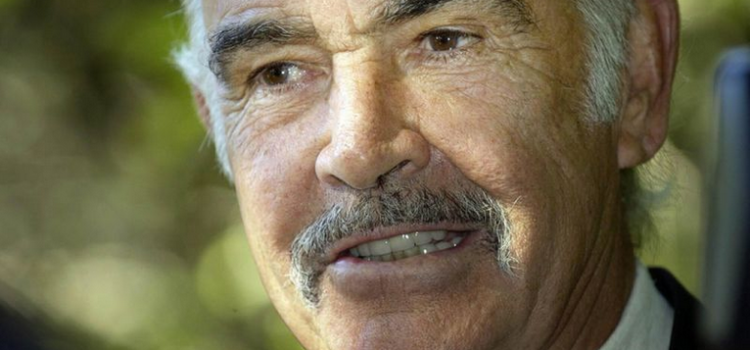
Sir Sean Connery has died at the age of 90, his family has said.

The Scottish actor was best known for his portrayal of James Bond, being the first to bring the role to the big screen and appearing in seven of the spy thrillers.

Sir Sean died peacefully in his sleep, while in the Bahamas, having been “unwell for some time”, his son said.

His acting career spanned decades and he won an Oscar in 1988 for his role as an Irish cop in The Untouchables.

Sir Sean’s other films included The Hunt for Red October, Indiana Jones and the Last Crusade and The Rock.

Jason Connery said his father “had many of his family who could be in the Bahamas around him” when he died overnight.

He said: “We are all working at understanding this huge event as it only happened so recently, even though my dad has been unwell for some time.

“A sad day for all who knew and loved my dad and a sad loss for all people around the world who enjoyed the wonderful gift he had as an actor.”

Sir Sean was largely regarded as being the best actor to have played 007 in the long-running franchise, often being named as such in polls.

He was knighted by the Queen at Holyrood Palace in 2000. In August, he celebrated his 90th birthday.

He was a long-time supporter of Scottish independence, saying in interviews in the run-up to the 2014 referendum that he might return from his Bahamas home to live in Scotland if it voted to break away from the rest of the UK.

Scotland’s First Minister Nicola Sturgeon said: “I was heartbroken to learn this morning of the passing of Sir Sean Connery. Our nation today mourns one of her best loved sons.”

Source: BBC News

The prime minister is considering a month-long lockdown across England in the hope that measures could be eased before Christmas.

A new “stay at home” order could be announced on Monday, with schools, colleges and universities exempt.

Documents seen by the BBC suggest the UK is on course for a much higher death toll than during the first wave unless further restrictions are introduced.

Deaths could reach more than 4,000 a day, one of the models suggests.

This figure is based on no policies being brought in to slow the spread of the disease, but most of the models peak at about 2,000 a day.

At the height of the pandemic during the spring, deaths in the UK reached more than 1,000 a day.

Infection rates are currently soaring across much of Europe, prompting new forms of lockdown in Belgium, France and Germany .

And a separate document circulating in government – based on NHS England modelling from 28 October – warns that the NHS would be unable to accept any more patients by Christmas, even if the Nightingale hospitals are used and non-urgent procedures cancelled.

The document warns that south-west England and the Midlands will be the first to run out of capacity, potentially within a fortnight.

A government source said that the country is at a “crunch point”.

No final decisions have yet been taken, and not all cabinet members have yet been consulted on the next steps.

But it seems that Mr Johnson is likely to take the national action that he swore he would do everything to avoid.

Source: BBC

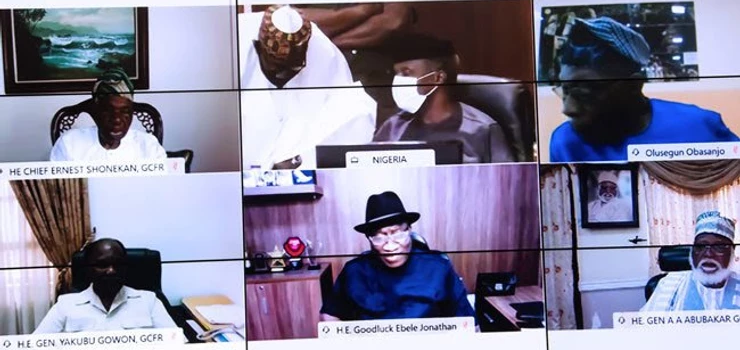
Presidential aide, Femi Adesina has shed light on the meeting between Nigeria’s former heads of state and President Muhammadu Buhari.

Adesina who spoke on Friday, said the #EndSARS protests and other national issues were discussed during the parley.

“Lives had been lost in scores, countless public and private properties burnt, there was murder and mayhem everywhere,” Adesina explained in a post on his website captioned “Inside PMB’s Parley With Former Heads of State.”

“So, it was needful that all former leaders of the country meet to put heads together, and fashion pragmatic ways forward.”

He applauded the former leaders for turning out for their motherland, saying their cumulative experience came handy especially as the country tried to restore law and order.

“All that weight of experience was available at the meeting on that day, for the country to draw from, in restoring peace and cohesion after about two angry weeks,” he added.

According to Adesina, former Head of State, General Yakubu Gowon who gave the opening speech agreed that the #EndSARS protests which began peacefully, was later hijacked by some “organized miscreants.”

“Drawing from experiences in 1967, before the Nigerian Civil War, Gen Gowon gave some recipes for the government to consider,” the presidential aide quoted Gowon as saying.

He said President Buhari who spoke next, gave details of how the protests began, and efforts made by the government to address the demands of the demonstrators.

Buhari, he said, “did not mince words that what started as [a] legitimate protest by youths, was hijacked and misdirected by enemies of the country.”

He described former President Obasanjo as Frank but affable . According to him no tension was discerned and he ” lauded the Nigerian leader for his speech the previous night.”

On the job and economic situation in the country, he said the interventions being made were good, but not far-reaching enough for a population of 200 million people,” Adesina who was sworn-in as special adviser on media and publicity to Buhari on August 31, 2015, said, referencing Obasanjo.

On his part, General Ibrahim Badamasi Babangida (IBB) who expressed sadness at the turn of events in Africa’s most populous nation, extended his condolences to those who lost loved ones and properties.

IBB expressed worry at the quality of intelligence available to Nigerian security agencies, and commended “the government for the efforts so far, to end the protests.”

Chief Ernest Shonekan, who according to Adesina was brief in his speech ,called for proactiveness to curb similar developments in the future, stressing that such meetings should hold often to proffer solutions to national issues.

General Abdulsalami Abubakar who was present at the meeting also harped on the need for better intelligence on the part of security agencies and espressed believe that there is a need for more collaboration with the international body.

Former President Goodluck Jonathan, raised some fundamental questions though he hailed President Buhari for his speech.

The former Bayelsa State Governor said posers like “what led to the crisis?” would help the country in forestalling future occurrences, and admitted that the root cause of the crisis had been with Nigeria.

The protest that necessitated the meeting started when young Nigerians took to the streets, demanding the scrapping of the Special Anti-Robbery Squad (SARS), a unit of the Nigeria Police Force (NPF) accused of many atrocities over the past few years.

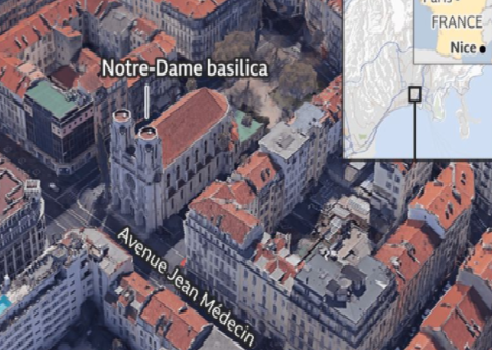
The Tunisian man who killed three people in a French church only recently arrived in Europe, officials say.

The suspect, 21, had an Italian Red Cross document, issued after he arrived by a migrant boat to Italy’s Lampedusa island last month. He was shot by police and is in a critical condition.

One of the victims of Thursday’s knife attack at the Notre-Dame basilica in Nice was “virtually beheaded”.

President Emmanuel Macron said it was an “Islamist terrorist attack”.

Mr Macron said the number of soldiers being deployed to protect public places – such as churches and schools – would rise from 3,000 to 7,000. Anti-terror prosecutors have opened an investigation, and France has raised its national security alert to the highest level.

Thursday’s stabbings in the southern French city have echoes of another attack earlier this month near a school north-west of Paris. Samuel Paty, a teacher, was beheaded days after showing controversial cartoons of the Prophet Muhammad to some of his pupils.

That murder has heightened tensions in France. Mr Macron’s defence of the right to publish the cartoons and the government’s attempts to crack down on radical Islam have angered Turkey and other Muslim-majority countries.

The suspect in the Nice attack was heard repeatedly shouting “Allahu Akbar” (God is greatest) before being shot by police.

A Koran, two telephones and a 30cm (12-inch) knife were found on the attacker, said French chief anti-terrorist prosecutor Jean-François Ricard.

“We also found a bag left by the attacker. Next to this bag were two knives that were not used in the attack,” he added.

Police sources named the attacker as Brahim Aouissaoui.

The suspect is in a critical condition in hospital, Mr Ricard said.

Speaking after visiting Nice, Mr Macron said: “If we are attacked once again it is for the values which are ours: freedom, for the possibility on our soil to believe freely and not to give in to any spirit of terror.

“I say it with great clarity once again today: we won’t surrender anything.

“Two other attacks took place on Thursday, one in France and one in Saudi Arabia.

A man was shot dead in Montfavet near the southern French city of Avignon after threatening police with a handgun.

A guard was attacked outside the French consulate in Jeddah in Saudi Arabia. A suspect was arrested and the guard taken to hospital.

Source: BBC

Labour has suspended former leader Jeremy Corbyn after an inquiry found the party was “responsible for unlawful acts of harassment and discrimination” during his time in charge.

The UK’s human rights watchdog identified “serious failings” in dealing with anti-Jewish racism.

And the watchdog said Mr Corbyn’s office had “politically interfered” in the complaints process.

Mr Corbyn insisted he did everything [he] could” to tackle the issue.

Source: BBC