

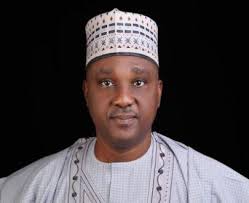



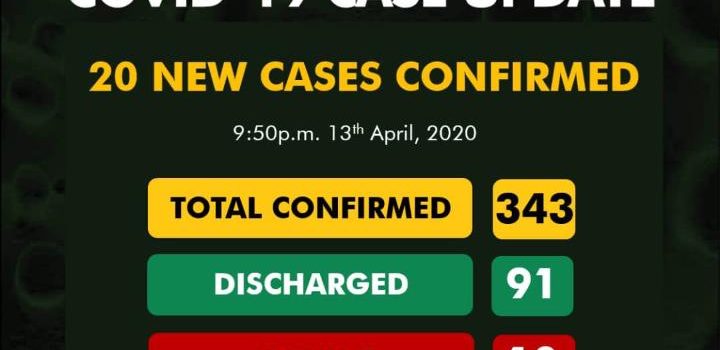
President Buhari Monday announced a 14 day extension to the lockdown in FCT, Lagos and Ogun States.According to him, this is necessitated by the need to limit the spread of the Coronavirus. He appealed to Nigerians to see the hardship as a sacrifice for self and the nation.Buhari promised that the social register would be expanded for 1 million more vulnerable persons to benefit. Meanwhile the NCDC announced 20 new cases today bringing the total number so far to 343 with ten deaths and 91 confirmed cases.
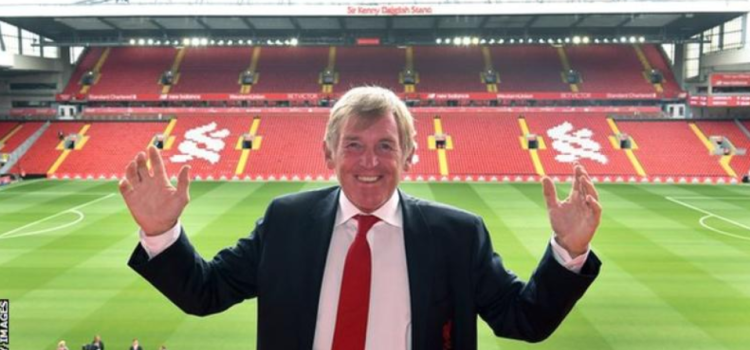
Liverpool legend Sir Kenny Dalglish has been released from hospital after testing positive for coronavirus.
Dalglish, 69, was admitted to hospital on Wednesday for treatment of an infection which required intravenous antibiotics.
He was routinely checked for coronavirus and tested positive despite showing no symptoms.
The former Celtic and Scotland forward is now recovering in self-isolation at home.
“Thank you for all of your well wishes over the last few days,” said Dalglish. “I’m delighted to be back home with the family after receiving brilliant care from the NHS, which we appreciate now more than ever.
“Marina and I would like to express our immense gratitude to the medical staff who cared for me and who continue to treat countless others throughout the country during an incredibly challenging period.
“We will now be in full lockdown for the recommended amount of time in order to protect the lives of others.”
Dalglish won the Scottish league title four times at Celtic before moving to Liverpool in 1977. At Anfield his honours included eight league championships as a player and manager and three European Cups.
He was manager at the time of the Hillsborough disaster in 1989, when 96 Liverpool fans died as a result of a crush at an FA Cup semi-final against Nottingham Forest.
Dalglish helped ensure the club was represented at all of the fans’ funerals and attended many of them in person. He and the 96 victims were awarded the Freedom of Liverpool in 2016.
He also won the Premier League as Blackburn Rovers manager in 1995.
Source: BBC
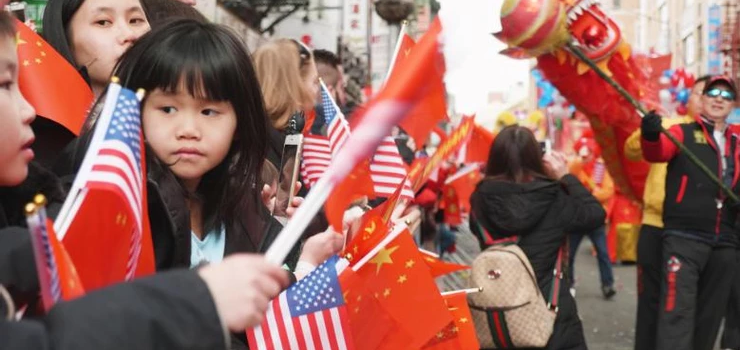
The African community in Guangzhou is on edge after widespread accounts were shared on social media of people being left homeless this week, as China’s warnings against imported coronavirus cases stoke anti-foreigner sentiment.
In the southern Chinese city, Africans have been evicted from their homes by landlords and turned away from hotels, despite many claiming to have no recent travel history or known contact with Covid-19 patients.
CNN interviewed more than two dozen Africans living in Guangzhou many of whom told of the same experiences: being left without a home, being subject to random testing for Covid-19, and being quarantined for 14 days in their homes, despite having no symptoms or contact with known patients.
Health authorities in Guangdong province and the Guangzhou Public Security Bureau did not respond to CNN’s request for comment.
The move comes amid heightened media coverage of the so-called second wave of coronavirus cases, emanating from infections outside of China. Earlier this week, Chinese President Xi Jinping urged authorities to carefully watch for imported cases from other countries, state news agency Xinhua reported.
But one aspect of the data has received relatively less public attention: on March 26, Vice Minister of Foreign Affairs Luo Zhaohui said 90% of China’s imported cases held Chinese passports.
On Thursday afternoon, Chinese Foreign Ministry spokesman Zhao Lijian said: “Since the beginning of the coronavirus outbreak, China and African countries have always supported each other and have always fought against the virus jointly.
“I would like to emphasize that the Chinese government treats all foreigners in China equally, opposes any differentiated practices targeted at specific groups of people, and has zero tolerance for discriminatory words and actions.”
Cases spark a backlash
Guangzhou has long had the largest African community in China. Because many Africans in the city have short-term business visas, they travel into China several times a year, making it difficult to calculate the size of the African population the city. But in 2017, approximately 320,000 Africans entered or left China through Guangzhou, according to Xinhua.
African residents say local hostility to their presence is nothing new. But when coronavirus cases emerged in the African community this month it served to amplify existing tensions.
An African in Guangzhou is tested for coronvirus at his apartment.
A report on April 4 alleged that a Nigerian national with Covid-19 had attacked a Chinese nurse who tried to stop him leaving an isolation ward at a Guangzhou hospital. The report was shared widely on social media, and local Africans CNN spoke to say a racist backlash against the African community followed.
Then on April 7, Guangzhou authorities said five Nigerians had tested positive for Covid-19.
Fearing a cluster among the African community, Guangzhou authorities upgraded the risk level of Yuexiu and Baiyun, the areas home to the city’s two African enclaves, from low to medium, state-owned Global Times reported.
The local government Tuesday reported 111 imported cases of Covid-19 in Guangzhou, with 28 patients from the UK and 18 from the US. In interviews with CNN, Americans and British nationals in Guangzhou said they had not heard reports of forced testing, home evictions and additional quarantine measures being imposed on members of their communities.
On Saturday, however, the US Consulate in Guangzhou warned African-Americans to avoid travel to the city.
“In response to an increase in Covid-19 infections, officials in the Guangzhou metropolitan area escalated scrutiny of foreign nationals,” the consulate said in a statement. “As part of this campaign, police ordered bars and restaurants not to serve clients who appear to be of African origin. Moreover, local officials launched a round of mandatory tests for Covid-19, followed by mandatory self-quarantine, for anyone with ‘African contacts,’ regardless of recent travel history or previous quarantine .
Source: CNN
The Japanese government has allocated billions of dollars in a stimulus package to help manufacturers move production out of China and into other countries.
Get home delivery of the magazine. Subscribe today!
The stimulus package, which is to offset the financial hit of the coronavirus, includes 220 billion yen, or $2.2 billion, for companies shifting production from China back to Japan, and 23.5 billion yen for companies to shift to other nations, according to Bloomberg.
“There will be something of a shift,” said Shinichi Seki, an economist at the Japan Research Institute. “Having this in the budget will definitely provide an impetus.” Companies that manufacture for the Chinese market, such as car makers, will likely remain, he said.
The Japanese government has allocated billions of dollars in a stimulus package to help manufacturers move production out of China and into other countries.
The stimulus package, which is to offset the financial hit of the coronavirus, includes 220 billion yen, or $2.2 billion, for companies shifting production from China back to Japan, and 23.5 billion yen for companies to shift to other nations, according to Bloomberg.
The move comes as Japanese Prime Minister Shinzo Abe attempts to establish friendlier ties with China. A meeting between Abe and Chinese President Xi Jinping was slated for earlier this month in Japan, what would have been the first state visit in a decade, was postponed due to the coronavirus pandemic.
“We are doing our best to resume economic development,” Chinese Foreign Ministry spokesman Zhao Lijian said at a briefing Wednesday in Beijing when asked about the two countries’ relationship. “In this process, we hope other countries will act like China and take proper measures to ensure the world economy will be impacted as little as possible and to ensure that supply chains are impacted as little as possible.”
Source: Washington Examiner
Chinese smartphone maker Huawei says the Australian government has banned it from providing 5G technology for the country’s wireless networks.
It said fellow communications firm ZTE had also been banned, both reportedly because of national security concerns.
“This is a extremely disappointing result for consumers,” the company said on Twitter.
Faster data download and upload speeds are promised with 5G, which is the next stage of mobile internet connectivity.
Wider coverage and more stable connections than current 4G technology are also highlighted as benefits.
What’s the issue?
Several countries are preparing for the roll-out of 5G mobile networks, although analysts say few will launch 5G services before 2020.
Mark Newman, from the consultancy ConnectivityX, said: “5G is going to be the next significant wave of mobile infrastructure deployment.
“If existing suppliers are banned, it will be quite a major blow for them.”
Huawei is the world’s biggest producer of telecoms equipment. It also ranks second in global smartphone sales, behind Samsung and ahead of Apple.
In July, a UK security committee warned that it had “only limited assurance” that Huawei’s telecoms kit posed no threat to national security.
The UK’s cyber-defence watchdog – the National Cyber Security Centre – has also warned that the use of ZTE’s equipment and services could pose a national security risk.
Image caption
Huawei has a larger share of the phone market than Apple
“As we move into 5G, a greater proportion of the network is controlled by software,” said Mr Newman.
“There is an argument that in this software realm, concerns about who is managing the network and where from are heightened.”
What has Australia said?
On Thursday, the Australian government said national security regulations that were typically applied to telecoms firms would be extended to equipment suppliers.
Companies that were “likely to be subject to extrajudicial directions from a foreign government” could present a security risk, it said.
The United States has previously banned Huawei from bidding for government contracts because of fears over espionage. ZTE has also had its activity restricted in the US.
Under Chinese law, companies must co-operate with the intelligence services. Analysts therefore warn that equipment produced by firms such as Huawei and ZTE could be compromised.
How has China responded?
China’s foreign ministry spokesman Lu Kang said Australia should not “use various excuses to artificially erect barriers”.
It called on Australia to “abandon ideological prejudices and provide a fair competitive environment for Chinese companies”.
Huawei has defended the security of its products.
Huawei is a world leader in 5G,” the company said in a statement.
It said it had “safely and securely” delivered wireless technology in Australia for close to 15 years.
Source :BBC
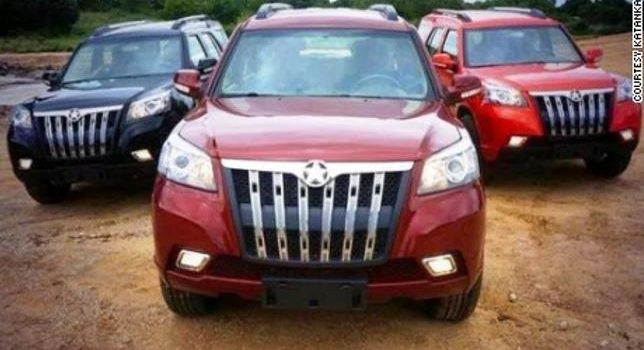
The grinding conflict between the Nigerian state and Boko Haram insurgents has exacted a devastating human and economic toll over the past six years.But for Nigeria’s first car manufacturer, the crisis may represent an opportunity.The Nigerian Air Force (NAF) recently announced a partnership deal with Innoson Vehicle Manufacturing (IVM), which will see the company supply spare parts for jets conducting airstrikes against the insurgents.”The ingenious effort by IVM is instrumental to the continued operation of the Alpha Jets,” NAF spokesperson Ayodele Famuyiwa said of the deal. “IVM helped to save the day when help was not forthcoming from abroad.”The air force reached out to Innoson in 2015, as it faced increasing difficulty with the import of vital parts such as brake pads. The deal was struck after a series of site visits around the country.”The army came to our factories in many states,” says Innoson spokesperson Cornel Osigwe. “They saw we had the capacity.”IVM, part of the Innoson Group owned by billionaire Innocent Chukwuma, started producing commercial vehicles such as coaches in 2007, before launching a range of private cars in 2014 — the first to carry a “Made in Nigeria” seal.The offshoot company now employs over 7,000 people and has capacity to produce 10,000 cars a year. It is hoped that the partnership with NAF could help the business expand further.”The attention is providing a big boost for the company,” says Osigwe.Innoson has gained several new clients since the deal, according to the spokesperson, including the National Assembly. Leading politicians such as Senator Ben Murray-Bruce have offered strong support.

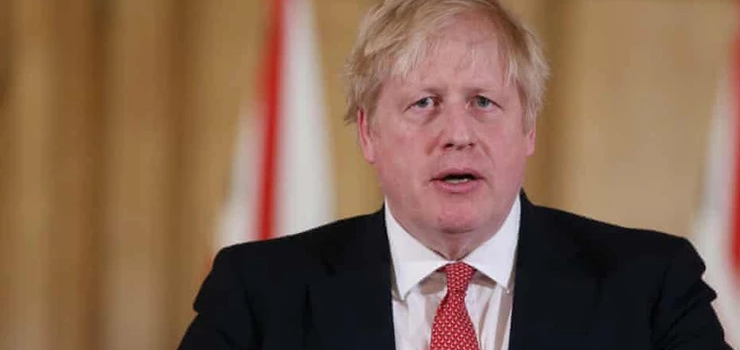
Prime Minister Boris Johnson has been moved out of intensive care but remains in hospital, Downing Street has said.
Mr Johnson has been receiving treatment for coronavirus at St Thomas’ Hospital in London since Sunday.
No 10 said he “has been moved this evening from intensive care back to the ward, where he will receive close monitoring during the early phase of his recovery”.
A spokesman added: “He is in extremely good spirits.”
He was taken to hospital on Sunday – 10 days after testing positive – and was moved to intensive care on Monday.
Mr Johnson received “standard oxygen treatment” in intensive care and was not put on a ventilator, Downing Street said earlier.
He “continues to improve” after a “good night” and thanked the NHS for the “brilliant care” he has received, the spokesman added.
US President Donald Trump tweeted that Mr Johnson’s move out of intensive care was “great news”, adding “get well Boris!”
Health Secretary Matt Hancock tweeted: “So good that the prime minister is out of intensive care and on the road to recovery. The NHS is there for us all and I know our amazing NHS staff have given him their characteristic world-class care.”
Newly elected Labour leader Sir Keir Starmer also welcomed the “good news”, tweeting: “I hope it is the beginnings of a speedy recovery.”
Meanwhile, applause rang out across the UK in the third “Clap for Carers” event, where people showed their appreciation for NHS staff and other workers on the front line of the pandemic.
A total of 7,978 people have now died in hospital after testing positive for coronavirus, up by 881 on Wednesday.
Source: BBC
Shareholders of quoted firms on the floor of the Nigerian Stock Exchange recorded a gain of N28bn during the first two weeks of lockdown over the COVID-19 pandemic ravaging the country.
Market watchers had speculated that the announcement by the Federal Government ordering restriction of movements in Lagos, Ogun states and the Federal Capital Territory, Abuja for a period of first 14 days would dampen investors’ sentiment.
During the 14 days, the market opened for eight trading days as the Federal Government declared Friday, April 10 (Good Friday) and Monday, April 13 public holidays for the Easter period.
Checks by our correspondent showed that activities on the NSE which opened the trading at N11.12tn in market capitalisation and 21,330.79 in index at the beginning of trading on March 31 closed at N11.14tn and 21,384.03 index points on April 13, hence made a cumulative gain of about N28bn.
Also, the All-Share Index grew by 53.24 basis points or 0.25 per cent. The index measures the performance of the stock market and reflects how prices of stocks have moved, which in turn determines how much investors made as gains or losses.
Since the outbreak of the pandemic, financial markets, particularly the capital markets around the world have seen levels of volatility that are only comparable to the global financial crisis of 2007/2008.
To maintain the integrity of the market and in order for it to continue to stimulate economic growth, the NSE activated its business continuity plan on March 23.
Through the activation, the exchange has continued trading during normal hours and days by providing remote trading access for dealing member firms through FIX Protocol and Virtual Private Network platforms.
The acting DG SEC, Ms Mary Uduk, speaking on how the lockdown had affected the capital market on Wednesday said, “We are happy with the way the capital market is going; we have released about three circulars concerning the action against the COVID-19. One of them was to tell the entire capital market operators who we regulate to give us report on their Business Continuity Plan and processes.”
She added that the market had been trading as everyone had activated their BCPs.
Source: Punch
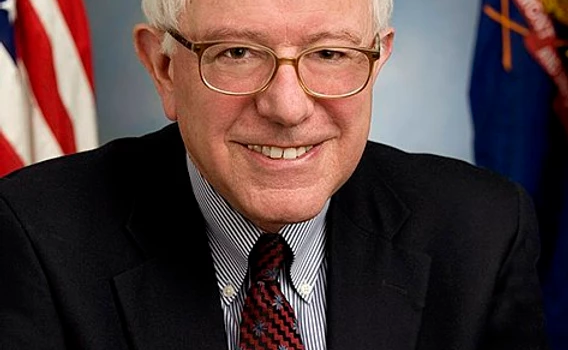
Sen. Bernie Sanders dropped out of the 2020 presidential race Wednesday, ending an unprecedented Democratic primary and setting up a general election between President Donald Trump and former Vice President Joe Biden.
The independent senator from Vermont announced his move in a conference call with staff, after he suffered a series of crushing primary losses and the coronavirus pandemic stalled his campaign for weeks. Speaking to supporters, he said the path to winning the Democratic presidential nomination is “virtually impossible,” adding that he did not want to put effort into a doomed campaign as the outbreak rips through the country.
I cannot in good conscience continue to mount a campaign that cannot win and which would interfere with the important work required of all of us in this difficult hour,” he said in remarks livestreamed from his Vermont home.
Sanders congratulated Biden on Wednesday but did not explicitly endorse him. He called his former rival “a very decent man who I will work with to move our progressive ideas forward.” The senator said he would not drop off the ballot in states with upcoming primaries and try to amass more delegates in order to influence the party’s platform at its August convention.
“Then together, standing united we will go forward to defeat Donald Trump, the most dangerous president in modern American history,” he said.
In a statement after Sanders left the race, Biden said his former rival has “created a movement” and “changed the dialogue in America.” While he acknowledged that he and Sanders have different views on how quickly to move toward policy goals, he said he would continue dialogue with the senator and his supporters.
“I hope you will join us. You are more than welcome. You’re needed,” Biden said to Sanders’ loyal following.
After early triumphs in the Democratic primary, Sanders failed to pull away from Biden as a field that once numbered more than 20 candidates dwindled. Sanders saw success from Iowa to New Hampshire, Nevada, Colorado and California.
But he fell behind in the national delegate race as prominent Democrats, worried that he could become their nominee and face Trump in November, coalesced around Biden. After a string of primaries in mid-March, the former vice president racked up pledged delegates and became the race’s clear front-runner. Biden has racked up 1,196 delegates, versus 883 for Sanders.
Biden’s push for the nomination ground to a halt in recent weeks as a string of states delayed their primaries until June to slow the pandemic’s spread. Wisconsin held its primary Tuesday after a legal battle over whether to delay it, and Sanders verbally eviscerated the conservative-majority state and U.S. Supreme Courts for decisions that led to in-person voting taking place this week. The state will not report results until next week.
Sanders ran on the promise of a political “revolution” and touted his signature single-payer “Medicare for All” plan on the campaign trail. He also promised to cancel student debt and pass free universal child care — popular proposals to expand the social safety net that his rivals nonetheless criticized as unrealistic and expensive.
The senator lapped the field in fundraising with perhaps the most successful small-dollar donor operation ever. Though Sanders saw sustained success among young and Latino voters, Biden consistently won over black voters and older Democrats as he topped Sanders in a series of key states such as Texas and Michigan.
A week after his Michigan triumph, Biden crushed his rival in Florida, another delegate-heavy state.
As centrist candidates dropped out of the race to endorse Biden before and after Super Tuesday on March 3, Sanders decried an effort by the party establishment to defeat him.
After the senator left the race Wednesday, Trump continued his efforts to try to win over disillusioned supporters, many of whom do not identify with the Democratic Party. He tweeted that the “Bernie people should come to the Republican Party,” apparently citing their agreement on trade protectionism.
Sanders’ period as the race’s front-runner followed a remarkable rebound from a heart attack last year. The oldest candidate to run for president this year, Sanders experienced “chest discomfort,” during an Oct. 1 event, according to campaign advisor Jeff Weaver.
Testing revealed a “blockage in one artery” and two stents were inserted, Weaver added. Sanders missed only a small amount of time on the campaign trail.
He first vaulted to national fame with a strong 2016 primary race against Hillary Clinton. In his remarks Wednesday, Sanders said that “over the past five years, our movement has won the ideological struggle.”
He cited increased support in public polls for a $15 per hour minimum wage and a single-payer health care system, among other issues he said were once considered “radical and fringe.”
“In terms of health care, this current horrific crisis we are now in has exposed for all to see how absurd our current employer-based health insurance system is,” he said, in highlighting how millions of people who lose their jobs because of the coronavirus outbreak will also forfeit their coverage.
Sanders promised to push forward with the movement he has propelled since the 2016 election.
“Let us go forward together, the struggle continues,” he said in closing his remarks to supporters.
Source : CNBC
Democratic state representative from Detroit credited President Trump for touting a drug she says saved her life from the coronavrius.
“It has a lot to do with the president … bringing it up,” State Rep. Karen Whitsett told the Detroit Free Press on Monday. “He is the only person who has the power to make it a priority.”
Whitsett said she learned on Monday she tested positive for COVID-19 but started taking hydroxychloroquine, an antimalarial drug, last Tuesday after she began showing symptoms.
“It was less than two hours” before the Michigan lawmaker began feeling better, she said. When a reporter asked Whitsett if she believes Trump saved her life, she said, “Yes, I do. I do thank him for that.”
Trump has said the drugs could be an effective way of treating the virus and fast-tracked the FDA’s approval for coronavirus patients.
“It’s a powerful drug on malaria, and there are scientific works on this. Some strong signs,” he said over the weekend. “What do you have to lose? If it does work, it would be a shame if we didn’t do it early.”
However, members of the White House Task Force team fighting the coronavirus, including Dr. Anthony Fauci, have cast doubt on the drug’s effectiveness.
“In terms of science, I don’t think we can definitively say it works,” Fauci said on Sunday.
On Monday, a doctor in Los Angeles claimed he is seeing viability in the drug after administering it to critically ill patients with the coronavirus.
Detroit has become a hot spot for the nationwide coronavirus outbreak in recent days. More than 700 people in Michigan have
died from the virus as of Monday in a state nearing 20,000 confirmed cases.
Source: Washington Examiner

Comments
Hello world!
Fast Rising Fashion Designer Yvonne Yvette Assists Girl Child
NUJ Ondo state calls for action against the killers of its member Bunmi Afuye
Russia shifts focus in Ukraine invasion
President Buhari Warns APC Leaders Against Ego, Competition by Ada Nkong